In March of 1983, something unusual happened in living rooms across America—something that today feels almost impossible to recreate in a fragmented, always-scrolling world. For four consecutive nights, time itself seemed to slow down. More than one hundred million viewers tuned in to a single story, at the same time, sharing the same emotional current, as if an entire nation had agreed—without speaking a word—to feel something together.
That story was The Thorn Birds, a sweeping television event that blended romance, tragedy, faith, and the unforgiving beauty of the Australian outback into a narrative so emotionally charged that it became more than entertainment. It became a cultural moment. At the center of it all stood a young British actress, Rachel Ward, whose portrayal of Meggie Cleary carried a quiet intensity that lingered long after the credits rolled. She was only twenty-five, yet she carried the emotional weight of a lifetime on screen—love that could never fully be claimed, choices that could never be undone, and a life shaped as much by silence as by longing.
Hollywood, as it often does when it senses a new star, moved quickly. There was a sense that Rachel Ward had arrived at a threshold moment—one of those rare points in an actor’s life where the entire industry opens its doors at once. Leading roles, international fame, magazine covers, awards seasons, global recognition—all of it seemed to be waiting just beyond the horizon of that one defining performance. But what the world expected next and what Rachel Ward chose next would turn out to be two very different stories.
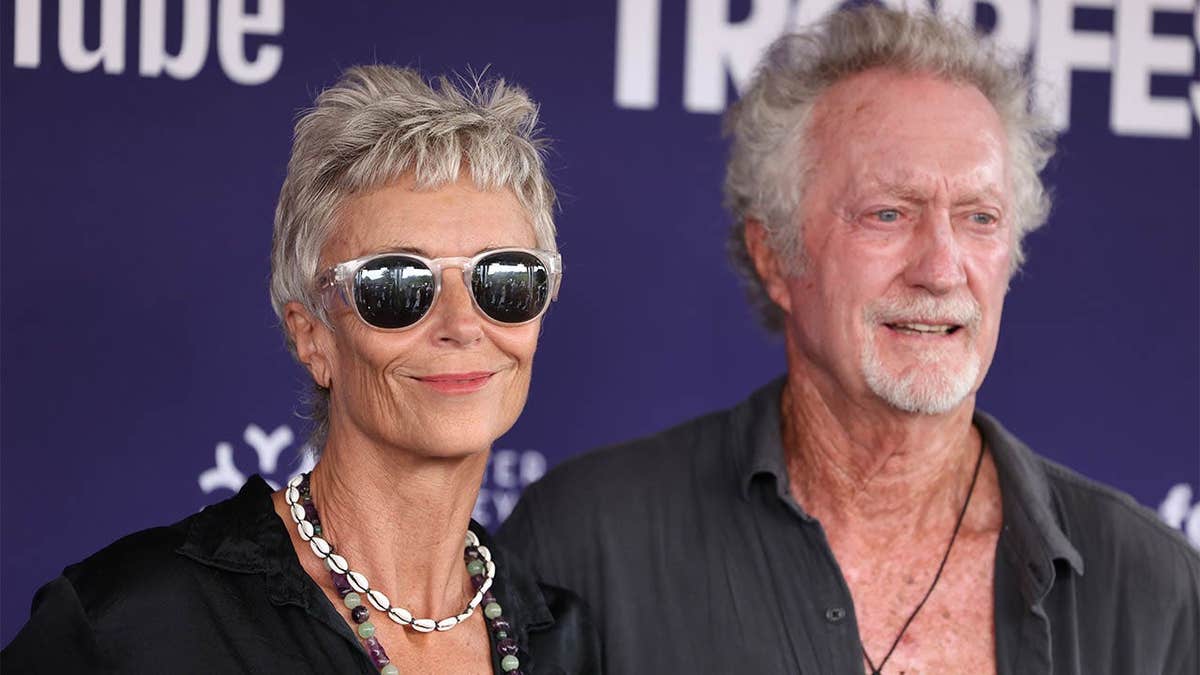
Behind the scenes of The Thorn Birds, another narrative quietly unfolded—one that had nothing to do with scripts or cameras, and everything to do with something far more unpredictable. She met Bryan Brown, an Australian actor whose presence on set carried a kind of grounded warmth that contrasted sharply with the emotional storms of the story they were telling. Where the production was intense, he was steady. Where the character Meggie was consumed by longing, Bryan felt like certainty. Their connection was not loud or theatrical; it was simple, immediate, and disarming in its naturalness.

What began as professional proximity gradually became something more difficult to define. Not a Hollywood whirlwind, not a calculated romance shaped by publicity, but something quieter and more inevitable. Bryan Brown proposed within months. Rachel, cautious and thoughtful, asked him to wait. Life-altering decisions, especially those made under the shadow of sudden fame, deserved space. But Bryan’s response carried a kind of emotional clarity that left little room for hesitation. He told her he might not ask a second time. It was not pressure—it was honesty. And in that moment, something shifted. Rachel Ward said yes.
That decision altered everything that followed. In 1983, the same year the world was watching her become a global sensation, she stepped into a different life entirely—one far removed from Hollywood’s gravitational pull. She and Bryan Brown built their marriage not in the spotlight of Los Angeles or London, but in Australia, where distance from the industry was not an obstacle but a form of freedom. By 1986, Rachel had become an Australian citizen. Together, they settled on a vast property in New South Wales—865 acres of open land, shifting skies, and a kind of quiet that most people in entertainment never encounter again once fame arrives.
For many, this would have looked like a retreat. For Rachel Ward, it was something closer to a real beginning. The world that had once defined her through screens and projections slowly gave way to something tangible—soil, weather, seasons, responsibility. The rhythm of life changed. Instead of scripts arriving on desks, there were mornings that began with physical work. Instead of premieres and press tours, there were fences to check, animals to understand, land that demanded attention not because it was glamorous, but because it was alive.
Yet she did not disappear from creativity. She continued to work as a writer and director, eventually earning recognition in Australian cinema, including an Australian Film Institute Award in 2001. But even these achievements began to feel secondary to something quieter forming beneath them: a life increasingly defined not by artistic ambition alone, but by stewardship of the land itself. Over time, the farm stopped being a backdrop to her life and became its center.

That transformation deepened further when she embraced regenerative farming—a practice that, in many ways, mirrors her own personal evolution. Instead of controlling the land, she learned to listen to it. Instead of forcing productivity, she studied balance. Soil health, pasture rotation, ecosystem restoration—these were not abstract environmental ideas, but daily decisions with visible consequences. The work was patient, physical, and often invisible to the outside world. There were no red carpets for soil regeneration, no standing ovations for improved grazing cycles. But there was meaning. And for Rachel Ward, meaning became more valuable than visibility.
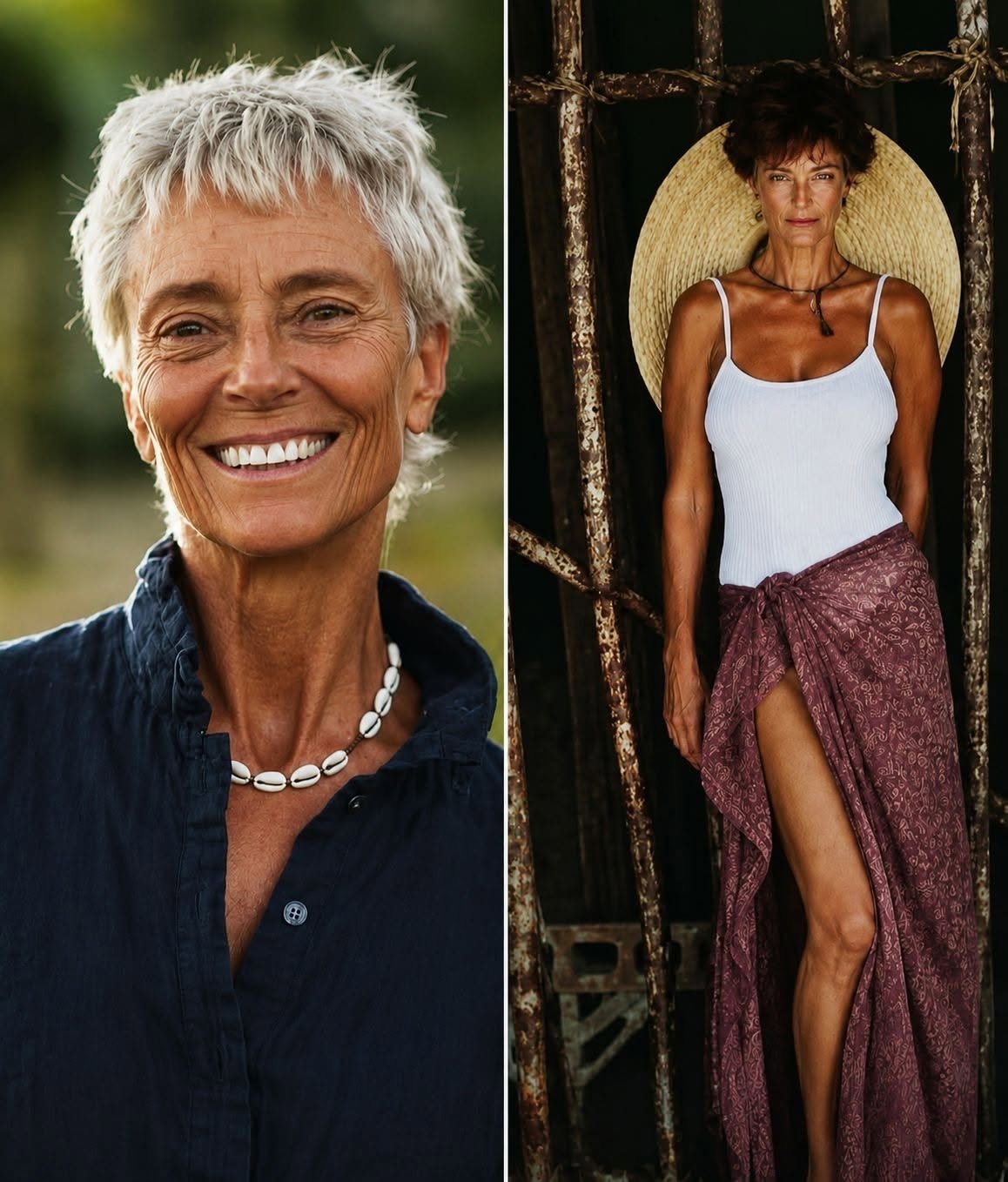
Years passed, and the public image that once defined her began to fade into memory. Then, in late 2024, a simple video appeared—unpolished, unfiltered, and unexpectedly powerful in its simplicity. Rachel Ward was seen driving an ATV across muddy paddocks, her hair short and grey, her face untouched by studio lighting or editorial framing. There was no performance in it, no attempt to recapture youth or recreate the image the world once adored. It was simply a woman moving through her own life, fully present in it.
The reaction was immediate, and predictably divided. Some viewers expressed confusion, even disappointment, asking what had happened to the radiant star they remembered from decades earlier. Others commented on aging as if it were a flaw to be corrected rather than a process to be lived. In a culture that often struggles with the passage of time, the contrast between memory and reality can feel uncomfortable, even confrontational.
But Rachel Ward’s response did not come from defensiveness. There was no attempt to correct perception or reclaim a former image. Instead, she offered something far more disarming: perspective. She spoke plainly about no longer caring what others thought about appearance or age, shifting attention away from herself and toward something else entirely—her work, her land, her present life. “I’m so past caring about what people think about one’s appearance or age,” she said, noting that what mattered most to her was not recognition, but whether her farm was doing well, whether her cows were healthy, whether the land was improving.
And then came a line that lingered far beyond the moment it was spoken. With quiet humor, she observed how ironic it was that going grey had attracted more attention than anything else she might have done. It was not bitterness—it was clarity. A recognition of how attention often works, and how little it has to do with substance. And to those who criticized aging itself, she responded not with argument, but with empathy. She expressed sympathy for people who fear growing older, suggesting that they might one day understand aging not as loss, but as liberation.
There is a version of Rachel Ward’s life that could easily have followed a familiar arc—early fame, sustained visibility, carefully managed public image, and a gradual fading into nostalgia. That version would have kept her forever preserved in the memory of The Thorn Birds, forever defined by a single moment in time when the world collectively decided she represented beauty, youth, and emotional intensity. But it would also have required maintenance—constant reinforcement of an identity tied to external validation, a life lived in negotiation with public expectation.
Instead, she chose something else entirely. She chose a life that does not depend on being seen in order to be meaningful. A life measured not in headlines or photographs, but in seasons and cycles. In the condition of soil after years of care. In the movement of cattle across land that is gradually being restored. In mornings that begin early not because they are scheduled, but because the work demands it. In evenings that end not with applause, but with exhaustion earned honestly.
What makes this transformation so compelling is not that she left Hollywood, but what she chose in its place. Farming is not a romantic escape in any conventional sense. It is demanding, unpredictable, and often invisible to the outside world. It requires patience in a culture that rewards speed, humility in an industry that rewards attention, and consistency in a world that often values novelty above all else. And yet, within that structure, Rachel Ward found something that fame alone could never provide: continuity.
Today, the image that once defined her career has been replaced by something quieter but more enduring. Not a character on screen, but a person fully present in her own life. Not a symbol of romance or longing, but a steward of land and time. The applause of millions has been replaced by the rhythm of weather, the needs of animals, and the subtle transformations of soil under careful attention.
And perhaps that is the most unexpected ending of all—not an ending at the height of fame, nor a retreat into obscurity, but a deliberate redefinition of what it means to live well. Rachel Ward did not simply step away from Hollywood. She stepped into something that asks for less performance and more presence, less image and more reality.
In the end, more than one hundred million people once watched her on screen, believing they were witnessing a love story that belonged to another time and place. But the most complete story of Rachel Ward was never confined to that screen. It continued beyond it, beyond the expectations of fame, beyond the limitations of public memory, into fields of New South Wales where the only audience that matters is the land itself—and where, by all indications, she is not performing at all, but simply living.
And in a world that rarely pauses long enough to notice the difference, that may be the most radical choice of all.