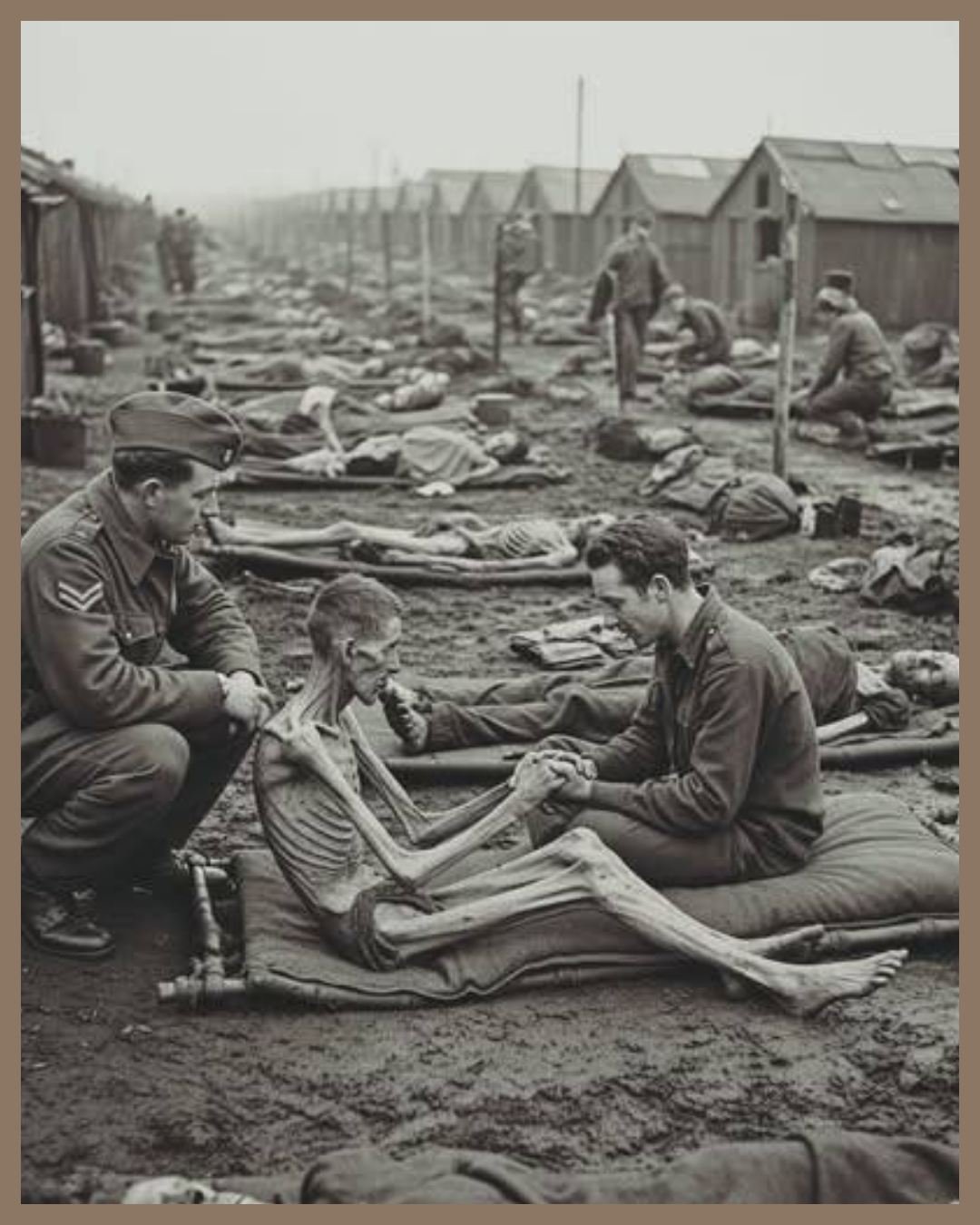
April 1945. The war in Europe was grinding toward its bloody conclusion, and Allied soldiers, hardened by years of combat, were confronting a new kind of horror: the liberation of Nazi camps. On April 18th, U.S. troops arrived at a makeshift camp that was less a prison and more a vast, open field of human wreckage. The air reeked of disease and despair. Among the skeletal figures scattered across the mud, two men drew the attention of a young American medic. One prisoner, a Dutchman named Pieter, was himself emaciated and trembling. Yet he remained upright, his focus not on his own suffering, but on the man lying beside him, whose life was fading fast.
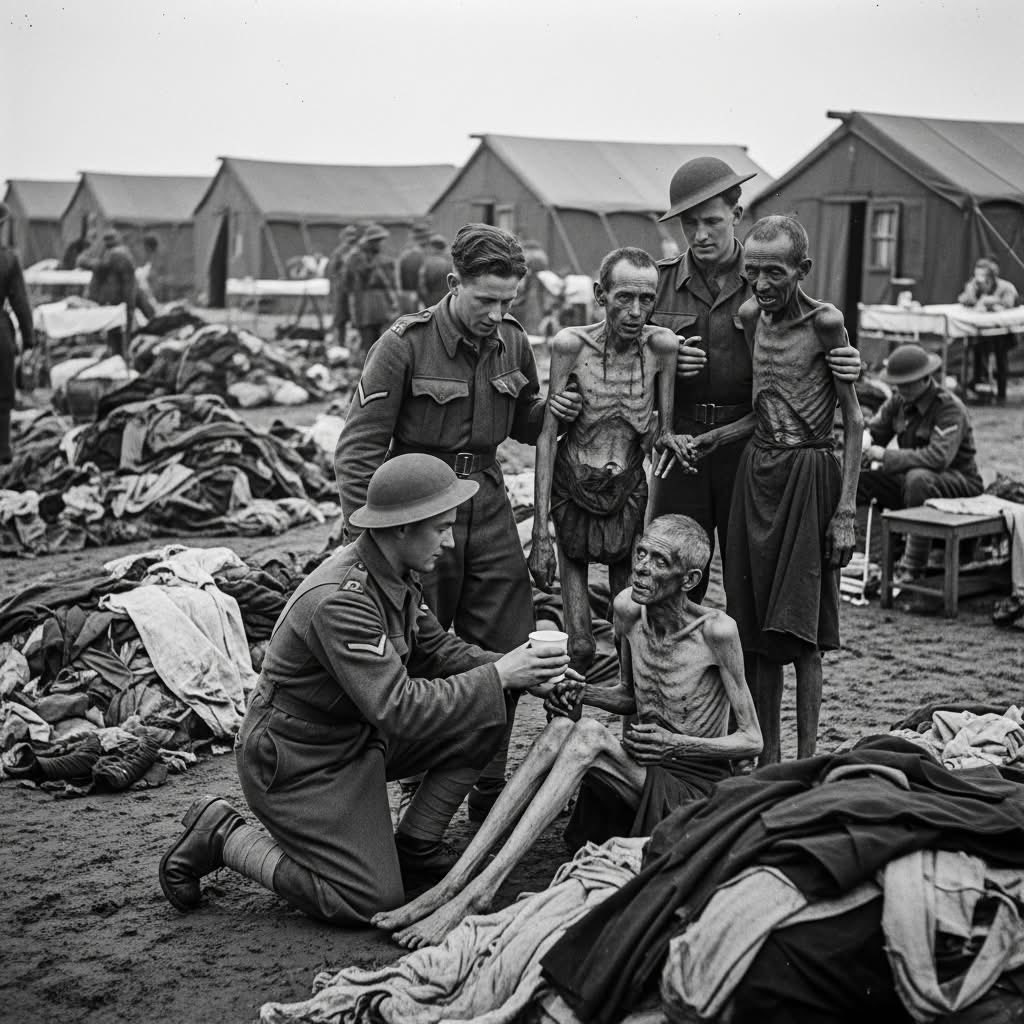
The scene was a profound contradiction. Surrounded by overwhelming death and degradation, a simple, sacred act was taking place. Pieter held the other man’s frail hand in his own, his thumb moving in slow, tender circles over the knuckles. It was a gesture of comfort, of companionship, a stubborn declaration that even here, humanity had not been fully extinguished. The bond between them, forged in shared agony, transcended language and circumstance.
The medic knelt in the mud, his training battling his shock. He checked the fading man’s pulse, but his eyes kept returning to their clasped hands. In that moment, he understood that his role was about more than just physical triage. By bearing witness to this quiet act of compassion, he was participating in it. The medic’s presence acknowledged their dignity; Pieter’s grip affirmed their connection. It was a collaborative resistance against the very ideology that sought to reduce them to nothing.
This story, captured in a single, haunting photograph, is not about grand heroics or military strategy. It is about the unbreakable power of human touch in the face of systematic inhumanity. Pieter, clinging to life himself, chose to offer solace. The medic, surrounded by unimaginable need, chose to honor that act. Together, in a field of despair, they created a pocket of profound humanity. It stands as an everlasting lesson: in our darkest hours, the choice to offer simple kindness, to hold a hand, or to acknowledge someone’s pain, is the most powerful rebellion of all.