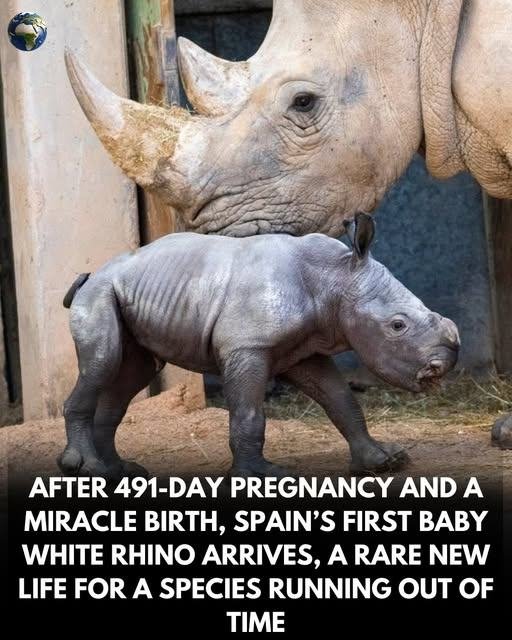
In a quiet corner of Bioparc Valencia Zoo, a monumental event unfolded with the birth of a white rhino calf, the first of its kind born in Spain. This was no ordinary arrival; the calf followed an extraordinary gestation of 491 days—over 16 months—carried by its mother, Duna. This prolonged pregnancy, a testament to the biological marvel of one of Earth’s largest land mammals, culminated in a moment of profound significance for global conservation efforts. The birth represents a hard-won victory in the ongoing battle to pull a species back from the brink of extinction.

The white rhino, a creature once abundant across African grasslands, now faces a critical crisis. Relentless poaching for its horn and severe habitat loss have decimated populations, leaving only a few thousand individuals in the wild. The northern white rhino subspecies is functionally extinct, with only two females remaining. Against this bleak backdrop, every successful birth under human care becomes a strategic beacon of hope. Bioparc Valencia operates as part of the European Conservation Program (EEP), a coordinated effort to maintain genetic diversity and ensure the species’ survival through carefully managed breeding.
The newborn calf, steady on its feet within hours, now bonds closely with its attentive mother. For the dedicated zoo staff who monitored Duna’s marathon pregnancy, the calf’s first steps are the joyful payoff for years of meticulous work. This birth is more than an addition to the zoo’s population; it is a living symbol of resilience. It proves that focused, science-driven conservation can create tangible results, offering a crucial genetic contribution to the future of a species whose story is still being written, one precious calf at a time.