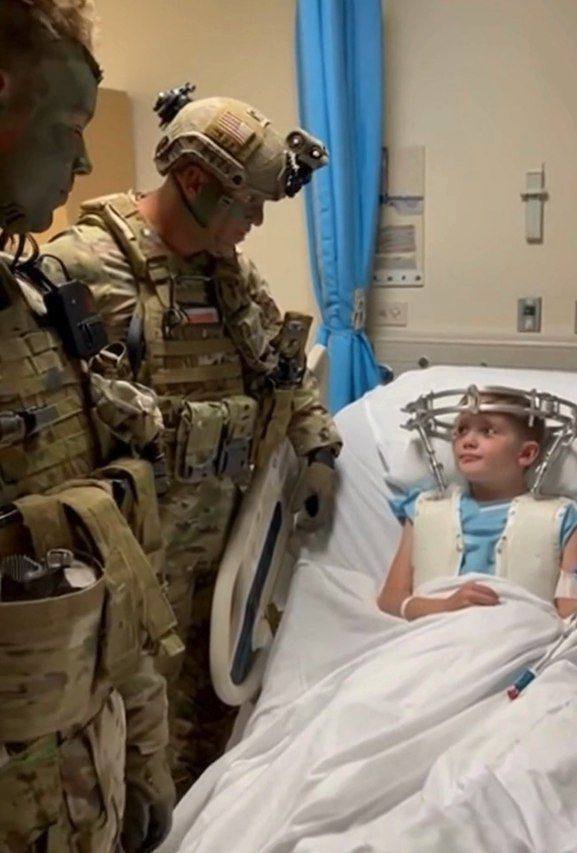
In the quiet, antiseptic world of a hospital room, a ten-year-old boy named Cody faced a fear deeper than any childhood nightmare. A devastating car accident had left him with severe spinal injuries, confined by a painful “halo” brace and facing a daunting twelve-hour surgery. The physical pain was immense, but the emotional weight—the isolation, the anxiety of the unknown—had begun to dim his spirit. For days, fear was his constant companion, until a simple, heartfelt wish cut through the silence: he wanted to meet a real soldier, a real hero. That wish would set in motion a chain of events where the line between battlefield bravery and personal courage would beautifully blur.
The wish reached a Navy SEAL through a hospital Child Life Specialist, who happened to be his sister. Without a moment’s hesitation, the team mobilized. Two SEALs, fresh from a grueling 48-hour urban training exercise, didn’t stop to change or rest. They arrived at the pediatric ward in full combat gear, their faces still marked with camouflage paint. The sight of these formidable warriors moving through the sterile halls brought the usual hospital bustle to a hushed standstill. For Cody, the moment they entered his room was pure, disbelieving magic. These were not characters from a movie; they were flesh-and-blood heroes, standing before him.
The interaction was brief but profound. One SEAL knelt by the bed, his voice softening from a battlefield command to a tone of gentle reassurance. “We heard we had a real fighter in here,” he said. He then unpinned a cherished team patch from his own vest and placed it in Cody’s hand, explaining it was given only to the toughest individuals they knew. In that simple gesture, a profound transaction occurred: they weren’t just visiting a sick child; they were recognizing a fellow warrior. The patch was a tangible symbol of strength, a medal for a battle about to be fought on an operating table.
The transformation in Cody was immediate and visible. The cloak of fear that had shrouded him began to lift, replaced by a newfound determination. Where there had been tears, there was now a steely resolve in his eyes. He was no longer just a patient; he was a recruit in an elite fraternity of courage, armed with a secret weapon—the knowledge that real-life heroes believed in him. When the time came for his marathon surgery, he faced it not with terror, but with the mindset of a soldier entering a mission, bolstered by the strength borrowed from his visitors.
Cody’s story resonates because it reveals a universal truth: heroes are defined not just by their acts in extreme circumstances, but by their willingness to offer their strength to others in moments of vulnerability. For the SEALs, it was a small detour. For Cody, it was a lifeline that changed the entire tenor of his fight for recovery. It reminds us that the greatest battles are often fought in silent rooms, and that sometimes, the most powerful armor is a simple act of kindness, a few earnest words, and a patch that says, “You are one of us.”