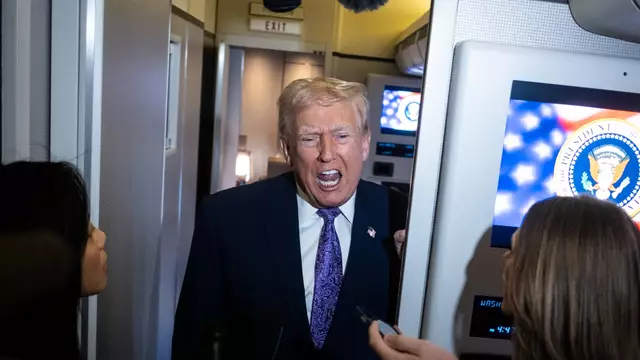
A routine White House press briefing took a sharp turn this week when a journalist’s simple question about a previous commitment led to a familiar scene: a personal attack from President Trump. The exchange, which quickly escalated, centered on a promise made just days earlier regarding the release of a military strike video.
The confrontation began when ABC News reporter Rachel Scott followed up on a topic from the previous week. On December 3, Trump had been asked directly if video of a controversial military strike off the coast of Venezuela would be made public. His response at the time was clear and agreeable: “Whatever they have we’d certainly release, no problem.” Five days later, Scott sought an update on that pledge.
What followed was a stark denial. President Trump interjected as Scott began her question, stating, “I didn’t say that, you said that, I didn’t say that, this is ABC fake news.” This contradiction of the public record set the stage for a tense back-and-forth. The reporter, referencing the earlier transcript, pressed for clarity on when the video would be released or if the Secretary of War would be directed to make it public.
The president then shifted to defending the policy behind the strikes, making expansive claims about their effectiveness in stopping drug trafficking. As Scott attempted to steer the conversation back to the central question of transparency and the video’s release, Trump’s demeanor changed. He launched into a personal critique of the journalist, calling her “the most obnoxious reporter in the whole place” and “a terrible reporter.”
This incident marks another entry in a long pattern of the president confronting members of the media who challenge his statements. The dynamic reflects a broader tension between the administration and the press corps, where questions framed as fact-checking are often met with deflection and personal denigration rather than direct answers.
For many observers, the president’s sharp rebuke of a reporter doing their job—holding power to account for its own stated promises—has become a predictable feature of the political landscape. The episode leaves the original question unanswered: when, or if, the American public will see the video the president once pledged to release with “no problem.”