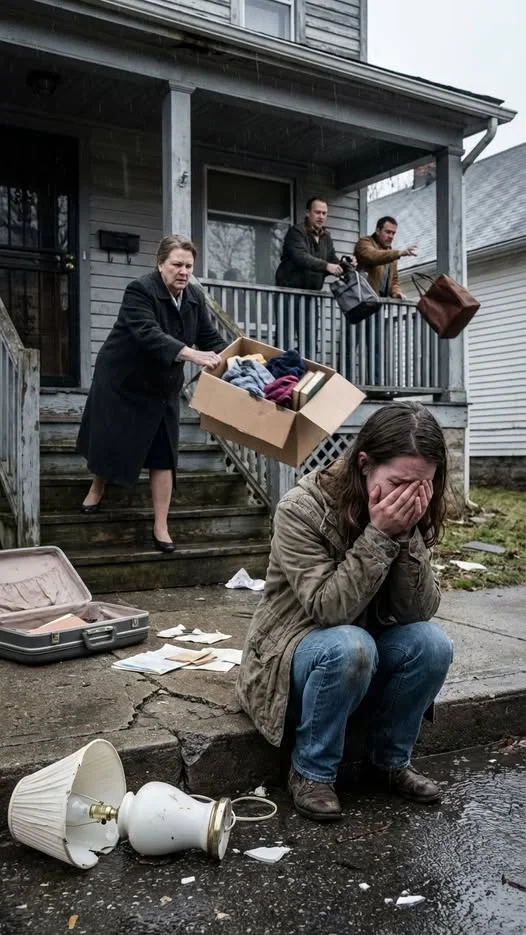
The porch of the Victorian house felt like a stage that Wednesday afternoon. My sister, Julia, stood there with our mother, their smiles not reaching their eyes. They brought the cold with them, not from the Oregon air, but from the calculation in their gaze. Inside, by the fireplace my grandfather built, Julia delivered her line with rehearsed malice: “We had the house signed into my name. You’re out by Friday.” Mother provided the chorus: “Some people don’t deserve nice things.” When Father arrived to seal the performance with his agreement, I felt a peculiar calm. The dread I’d carried for two years solidified, and I smiled. “You really think I’d let that happen?” I asked.
They thought they were so clever. Their scheme had props—documents with blurry seals, a man in a suit named “Blackwood” who smelled of cheap cologne and cheaper ethics. They thought my quiet nature, my career as an accountant, meant I was a passive number-cruncher. They didn’t understand that my grandparents had taught me a deeper math: the sum of love is trust, and the remainder of betrayal is zero. After they left, I didn’t cry. I called David, my lawyer and the trustee. “Let them play their hand,” I said. “Let them think they’ve won.”
Friday dawned bright and cruel. The moving truck was a grotesque symbol on my quiet street. Julia, our parents, and the faux lawyer marched up the walk, an army of entitlement. They demanded surrender. I invited them in, a hostess at her own wake. As they laid their fraudulent papers on my coffee table, I gave them enough rope, photographing each flawed page. Then, I opened the door. David’s entrance was not a dramatic shout, but a quiet, professional arrival. The two police officers and the fraud detective behind him were the punctuation marks to my family’s run-on sentence of greed.
The collapse was spectacular in its silence. Julia’s smirk melted into a wet mask of panic. Mother’s righteous indignation turned to sputtering denial. Father’s authoritarian posture deflated. The “lawyer,” sweating through his suit, was the first to be cuffed. The sound of the handcuffs clicking shut on my sister’s wrists was the most terrible and necessary sound I’ve ever heard. As they were led away, my father called out, accusing me of destroying the family. I stood on the porch, the true owner of the house and of my future, and watched the moving truck drive away empty. The Victorian stood firm, its trust unbroken, finally a home of peace and not a prize to be stolen.