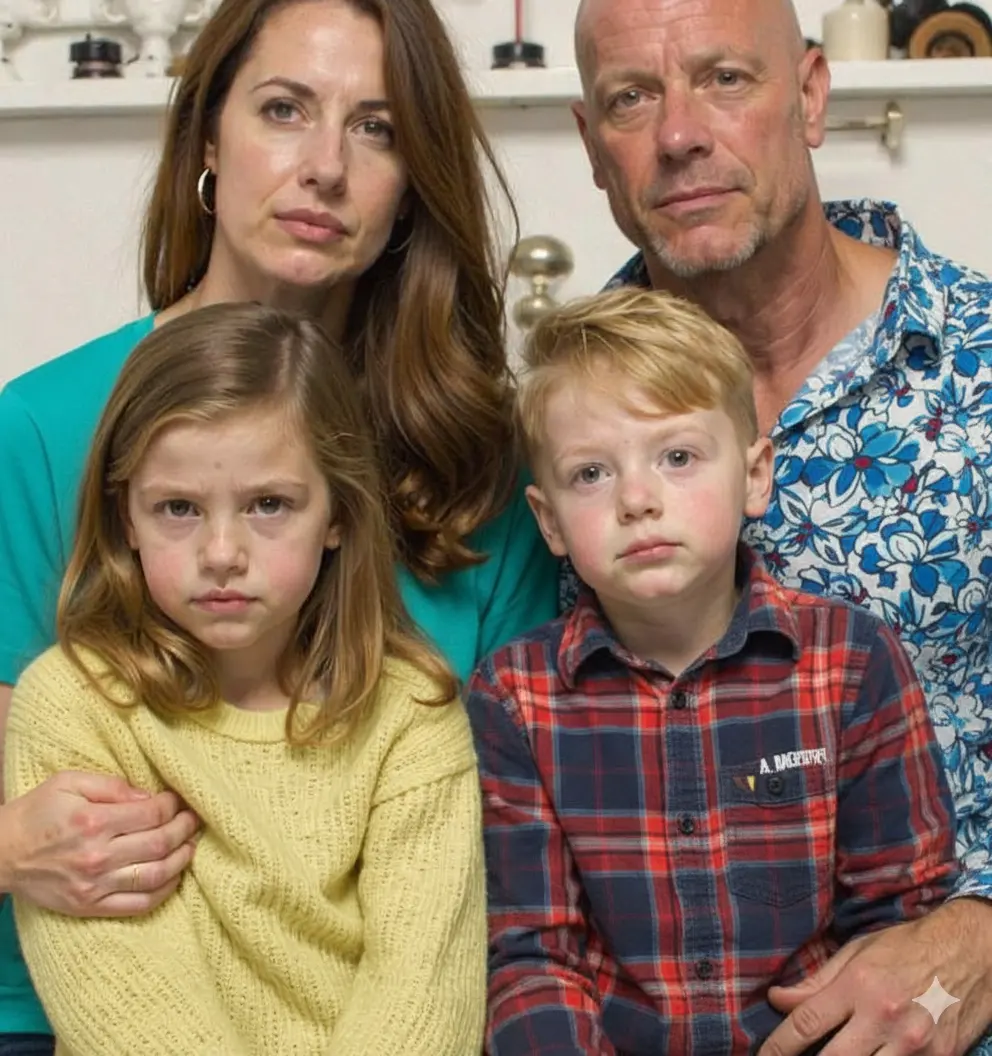
There is a special kind of loneliness in feeling like a single parent while married. For over a decade, that was my life. My husband Eric was a benevolent boarder in our home, contributing a salary and little else to the complex tapestry of raising our son and daughter. I convinced myself that his emotional absence was the price of our financial security. That fragile peace shattered the day he announced we should have a third child. To him, it was a compliment to our life. To me, it was a declaration that he saw me not as a person, but as a function—the childcare function—that could simply be upgraded with more workload.
Our ensuing fight was about more than babies; it was about value. When I pointed out his lack of involvement, he weaponized the women in his life. His mother and sister arrived as flying monkeys, chastising me for not being grateful enough for his provision. They preached the gospel of silent maternal sacrifice, a religion where mothers are pillars, not people with limits. Their interference made it clear: Eric wasn’t in this alone. He was the product of a system that expected my compliance. I wasn’t just fighting my husband; I was fighting an entire inherited worldview.
The standoff reached its peak when Eric, unable to bend me back into the shape of his expectations, told me to get out. The anger was real, but beneath it was a test. Would I crumble? Instead, I set a boundary he never anticipated. I agreed to leave, but I stated that our children would stay in their home. If he wanted me gone, he would have to step into the role he’d always delegated. It was a moment of pure, terrifying clarity. I was no longer negotiating for help; I was presenting him with the unvarnished reality of the responsibility he so casually wanted to expand.
His response was a masterclass in hypocrisy. He refused. The provider would not provide hands-on care. The man who wanted another child would not solo-parent the existing ones for a single day. That refusal was the key that unlocked my cage. It proved that his commitment was to an idea of family, not to the actual, demanding work of it. My love for my children was concrete and active; his was abstract and conditional on my management.
The divorce was not a defeat; it was the logical conclusion Eric himself had drawn. The court formalized the reality we had lived: I was the stable, capable parent. The house, the custody, the support—these were not prizes, but acknowledgments. I had spent years feeling like I was asking for too much by simply asking for a partner. I learned that if stating your needs ends a relationship, that relationship was already over. I turned the tables not out of vengeance, but out of survival. And in saving myself, I secured a better, more honest life for my children.