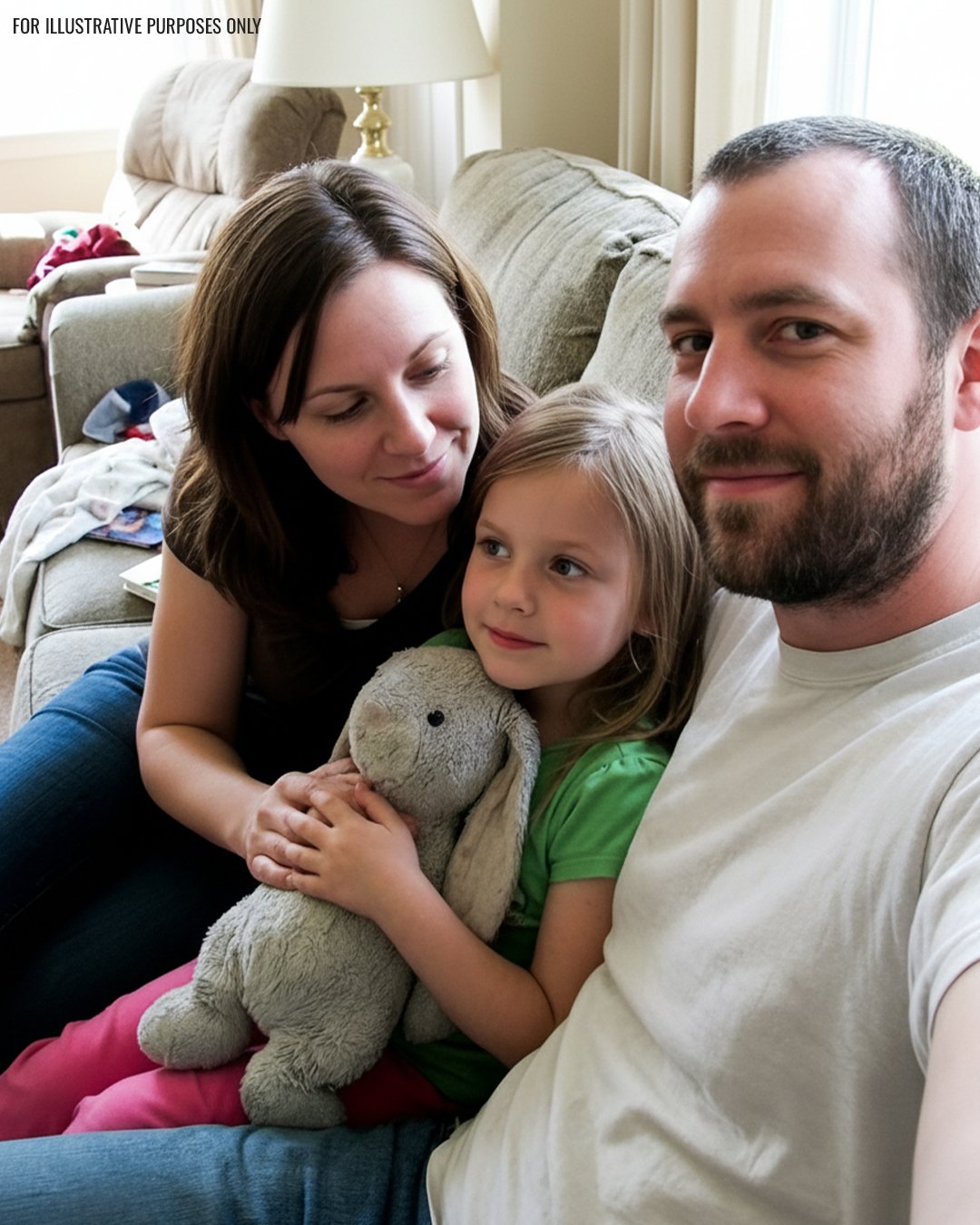
After years of infertility, Megan and Alex’s dream was realized in Lily, a silent six-year-old who carried a quiet sorrow. Their home became a sanctuary of patience, where her trust grew without words. They were prepared for a long, gentle journey toward healing. They were not prepared for how it would suddenly accelerate. Six months in, while coloring, Lily uttered her first words: a declaration that her mother was alive and living across the street. For adoptive parents, this was a heart-stopping moment, filled with logistical and emotional chaos. Was it a delusion? A buried truth? The answer required courage to seek.
Megan’s knock on the neighbor’s door led not to a shocking secret, but to a compassionate stranger named Claire, whose resemblance to Lily’s late mother was a mere, powerful coincidence. Claire’s role was not as a lost relative, but as a willing participant in Lily’s recovery. Her gentle clarification helped Lily’s mind reconcile the past with the present. This act of grace from a near-stranger was the final puzzle piece. Freed from a haunting fixation, Lily’s voice returned, and she fully embraced Megan and Alex as her parents. The narrative transcends a simple mystery, becoming a testament to how healing often requires a community—sometimes including the empathetic neighbor who helps a child turn the page, allowing a new family’s story to truly begin.
I hope these three versions provide the distinct perspectives you were looking for. Each emphasizes a different element—the power of correcting a misconception, the role of community in healing, and the emotional journey of the adoptive parents. Would you like any adjustments to the tone or focus?