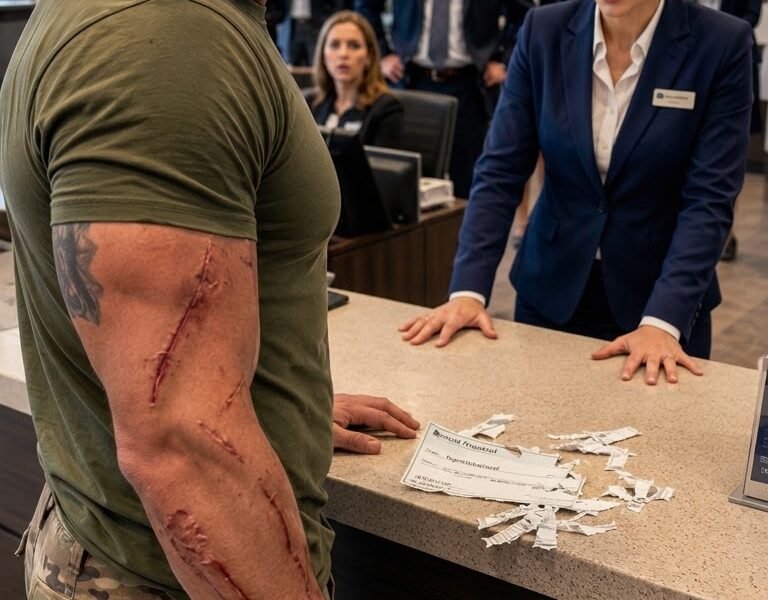
The call that comes at 2 AM is never good. For me, Michael Vance, it was usually my mother, Linda, her voice a razor of panic, telling me my brother Nathan was bleeding out in some ER unless I wired thousands immediately. For ten years, I paid. I was the rich, cold-hearted son in Chicago, funding my addict brother’s disasters and my perfect sister Jessica’s art studies in Paris. But on that freezing night, with the Nikkei index bleeding red on my screen, her scream for $15,000 hit differently. A decade of fatigue crystalized into a single, calm sentence: “Call your precious daughter.” I hung up. I slept like the dead.
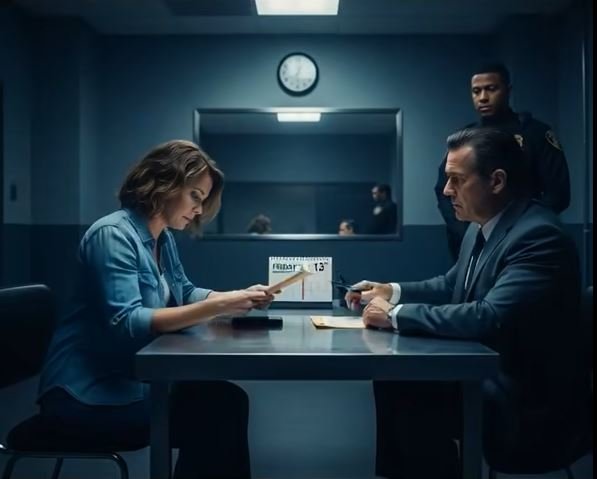
The police at my door at 8 AM told me it was about a murder. My first, sickening thought was that Nathan was dead because of me. But at the 19th Precinct, I found my mother handcuffed to a table, pale and shrunken. Nathan was in a holding cell, safe. The body, Detective Miller explained, was in the bathtub of my childhood home. He slid a photo toward me. Blonde hair. A butterfly tattoo. Jessica. “But she’s in Paris,” I stammered. The detective’s next words rebuilt my world from the ashes of a lie.
There was no Paris. Jessica had been kicked out of school five years ago for dealing, swallowed by heroin. My proud, image-obsessed mother had locked her in the basement, feeding her addiction while crafting an elaborate digital ghost—photoshopped Eiffel Tower pics, fake emails begging for tuition. And Nathan? The brother I’d resented for his weakness? He’d been clean for four years, a construction worker blackmailed by our mother into playing the family fuck-up. Every dime I’d sent to “save” him bought designer drugs for the sister I thought was sipping espresso on the Champs-Élysées.
The previous night’s drama was the final, grotesque act. Jessica had overdosed. Instead of calling 911, my mother needed cash to make the body disappear. The $15,000 was for a “black doctor” to clean her tragic secret off the slate. My refusal to send it meant the police found Jessica instead. The detective needed one thing from me: a signature on a fraud complaint. It was the legal key to hold my mother accountable, to prove the money was stolen, not gifted.
I looked at the woman who raised me, now pleading with her eyes. I thought of the real Nathan, the brother I never knew, and the sister lost to a lie. I picked up the pen. “Your honor is the most important,” I told her, my voice ice. “And mine does not allow me to nurture demons.” I signed. Walking out, I passed Nathan. No words were needed. Just a nod that held a lifetime of apology and understanding. The Chicago cold had never felt so clean. That $15,000 I kept? It was the cheapest price I ever paid for the truth.