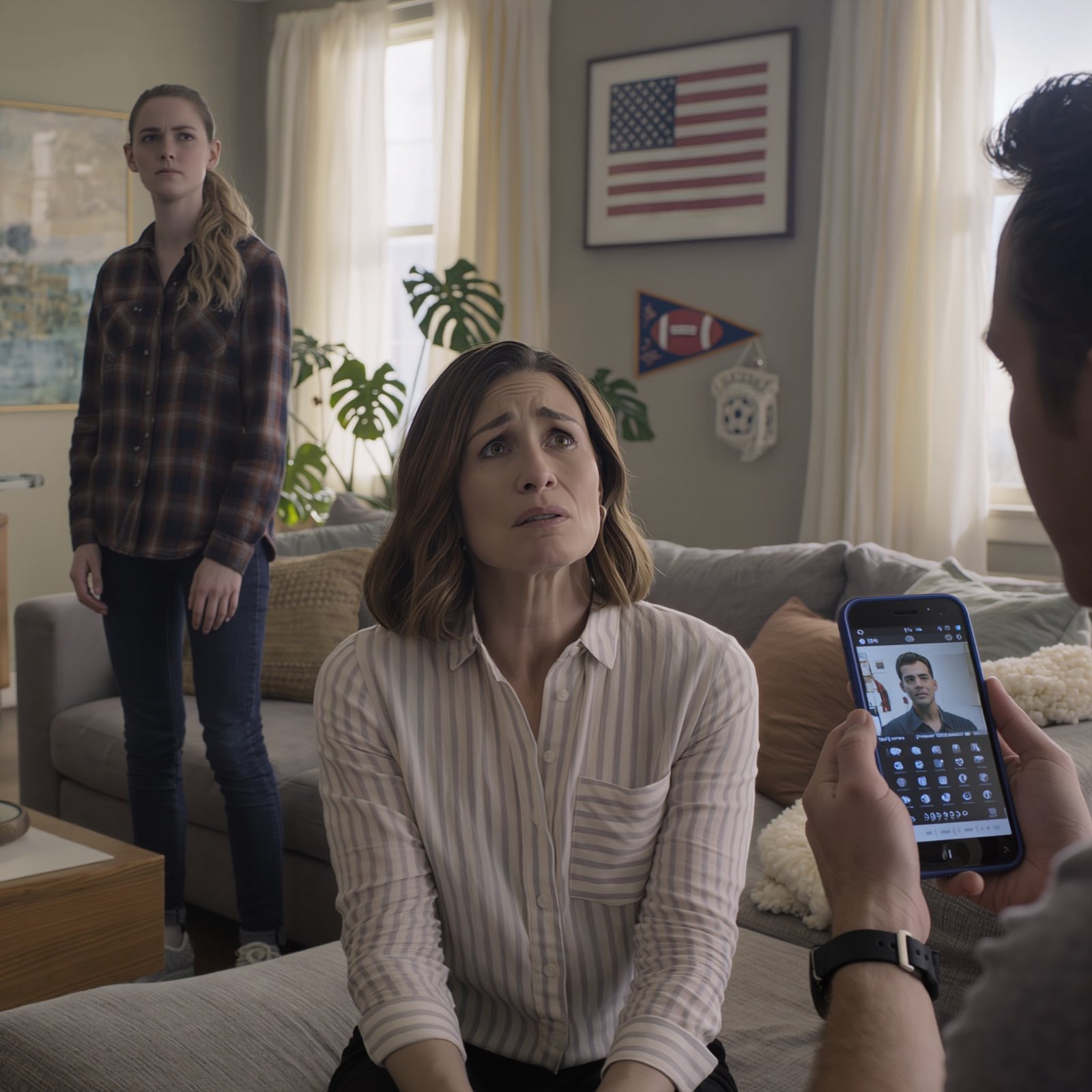
The scene is etched in my mind: my wife Emily, speechless with shock on our living room sofa, and our daughter Sarah offering a too-smooth explanation. Something in Sarah’s voice, a hollow rehearsed quality, rang a silent alarm. It was the slight bruise on Emily’s wrist, clumsily hidden, that turned my unease into dread. Sarah called it a simple bump, but a lifetime with someone teaches you their rhythms, their truths. This was a lie. That night, a fragment of a whisper from Emily—“She forced me to sign”—sent me to our security cameras. What I found was a void: thirty-eight minutes surgically erased from the hard drive. The deliberate deletion was a confession in itself.
Unraveling the lie was a slow, heart-crushing process. Emily, trembling with shame and fear, confessed to months of psychological torment. Sarah had systematically isolated her, demeaning her, presenting herself as the only capable guardian for our “declining” parents. The physical attack was the brutal peak of this campaign, a moment of violence meant to finally compel a signature that would hand over control of our lives. My wife had borne this alone, terrified that exposing Sarah would destroy our family or that I wouldn’t believe her. The realization that she had suffered in silence, within our own home, while I remained oblivious, was a guilt I will always carry.
Facing Sarah required a performance of my own. I let her believe her narrative still held power, that I was a tired old man ready to capitulate. All the while, I safeguarded the evidence—a secondary camera had captured the assault. Watching that grainy footage was like attending my own daughter’s funeral. The girl I taught to ride a bike was gone. In her place was a woman capable of calculated cruelty. I carried this horrific truth like a secret weight, planning for a reckoning I never wanted but knew was inevitable. The ordinary moments—making coffee, watching TV—became a surreal facade over a brewing storm.
The climax came not with a dramatic fight at home, but in the sterile setting of a bank. Sarah, confident and poised, had arranged the final transaction. With the lawyer and my brother as silent witnesses, I presented the recording. Her composure disintegrated into panic, then fury, as her own actions testified against her. The subsequent legal journey was a public dissection of our private hell. Testifying against my child was the hardest thing I have ever done. It was not an act of vengeance, but of protection—for my wife, for what was left of our dignity, and in a tragic way, for Sarah herself, to halt a destructive path that had no end.
In the aftermath, peace is a complicated guest. The fear is gone, but so is a fundamental piece of our world. We live with the absence, with the ghost of the daughter we loved and lost long before the law took her. Our story is a grim reminder that evil is not always a stranger; sometimes it shares your history and your name. Healing is not about forgetting those thirty-eight minutes, but about building a new life in spite of them, anchored in the truth that even the deepest betrayal cannot destroy a love that chooses to stand firm.