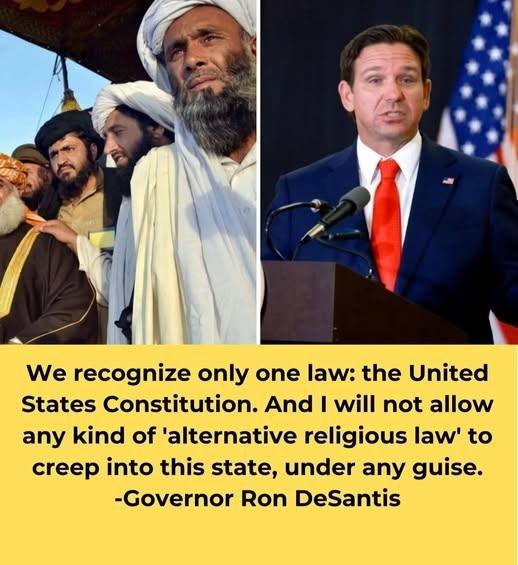
Governor Ron DeSantis has publicly cemented Florida’s legal philosophy with a straightforward principle: the U.S. Constitution is the supreme and exclusive law of the state. In remarks aimed at quelling debates over the influence of religious legal systems, DeSantis explicitly rejected any role for “alternative religious laws,” including Sharia, within Florida’s governance. This position is not merely a policy statement but a deliberate articulation of constitutional primacy, asserting that the framework established by the nation’s founders is the sole legitimate source of legal authority for public life.

The emphasis on constitutional supremacy over religious law touches on two foundational American values that exist in careful balance: religious liberty and secular governance. The First Amendment protects the free exercise of religion while forbidding the establishment of a state religion. DeSantis’s argument hinges on the latter clause, maintaining that for the government to remain neutral and fair, its laws must be secular in origin and application. Allowing religious codes to inform state law, he suggests, would compromise this neutrality and could lead to unequal treatment of citizens based on their beliefs. His stance is thus framed as a defense of equality before the law.
From a political perspective, the Governor’s comments engage with a potent symbolic issue. Discussions about Sharia law in America often serve as a proxy for broader anxieties about cultural change, immigration, and national identity. By taking a firm, public stand, DeSantis aligns himself with a segment of the electorate that views the vigorous defense of constitutional sovereignty as synonymous with the defense of American culture itself. It is a stance that draws a bright line, portraying Florida as a state that will not entertain legal pluralism and will uphold a traditional interpretation of the nation’s legal bedrock.
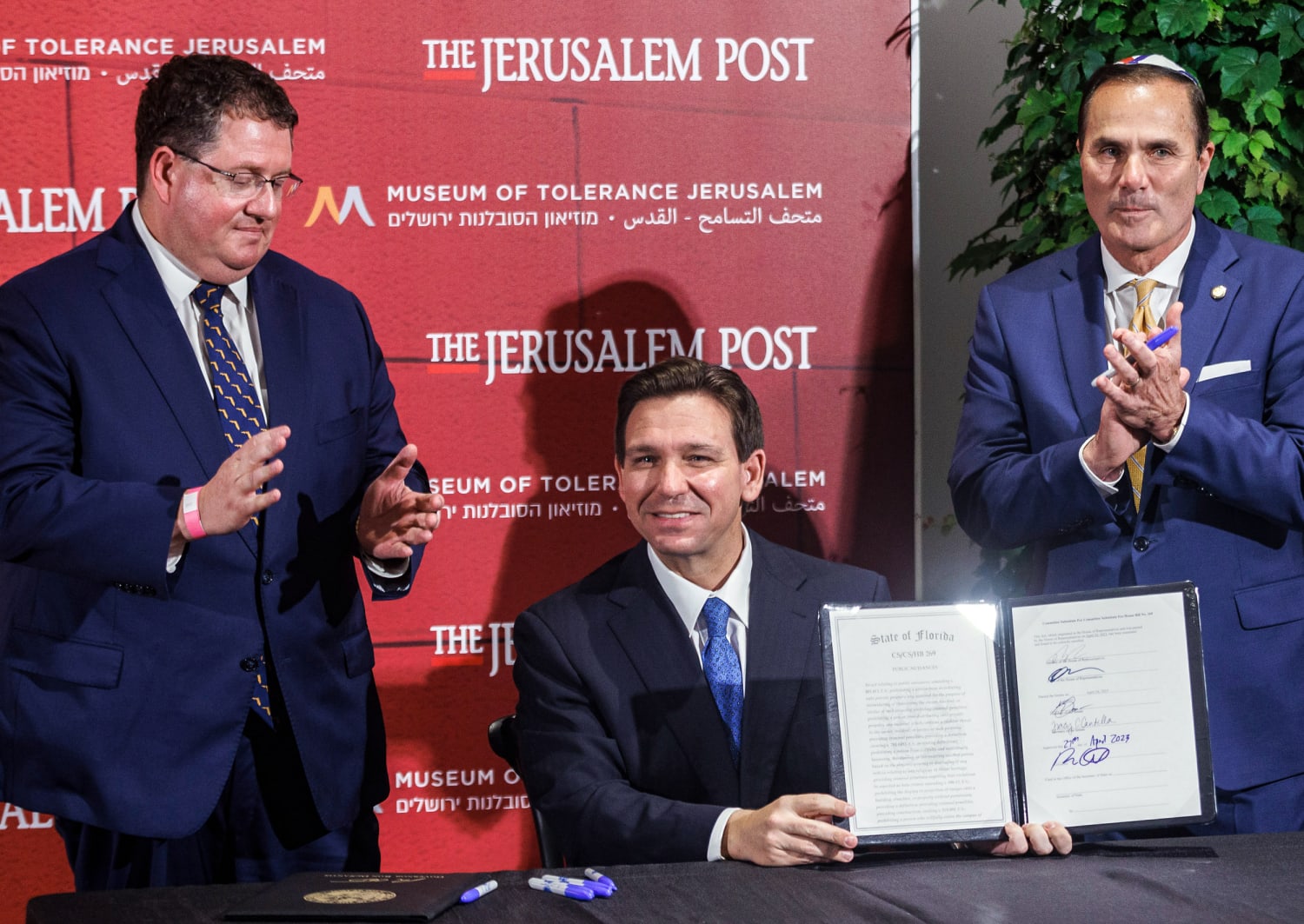
Ultimately, DeSantis’s declaration reinforces a fundamental, if sometimes contested, tenet of the American system: that the nation is a constitutional republic, not a theocracy. His statement serves as a reminder that the rule of law derives its power from a social contract embodied in the Constitution, not from religious texts. Whether seen as a necessary safeguard or a political maneuver, the Governor’s position places Florida at the center of an ongoing dialogue about how a modern, diverse society maintains a unified legal system that both protects personal belief and ensures that no single belief system dictates the law for everyone.