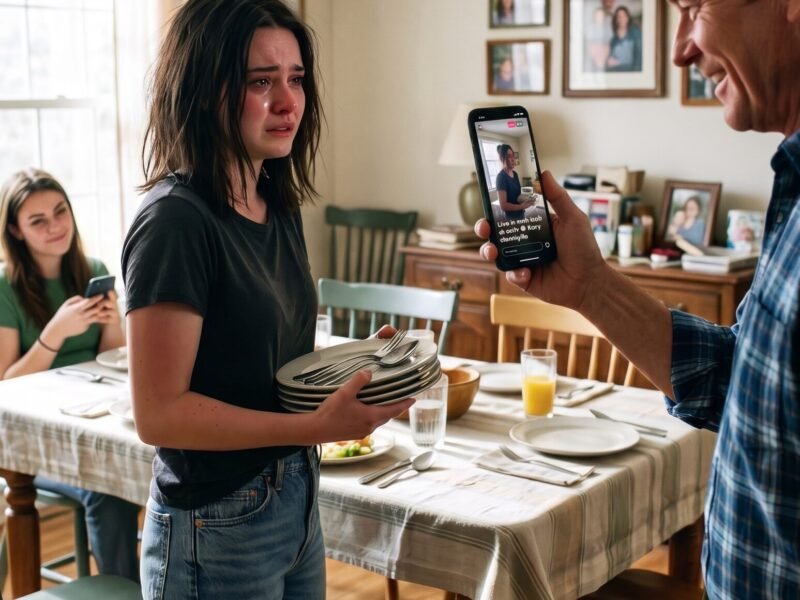
The refusal was polite, practical. My parents couldn’t help with the surgery I desperately needed; times were tough. I believed them, burying my pain and fear. A week later, their financial reality was dramatically rewritten by a showroom-white Mercedes for my sister, Chelsea. As she squealed with delight and my parents beamed with pride, I watched from my window, the ache in my stomach eclipsed by a deeper heartbreak. The car was more than a vehicle; it was a quantifiable measure of where I stood—or didn’t—in my family’s heart.
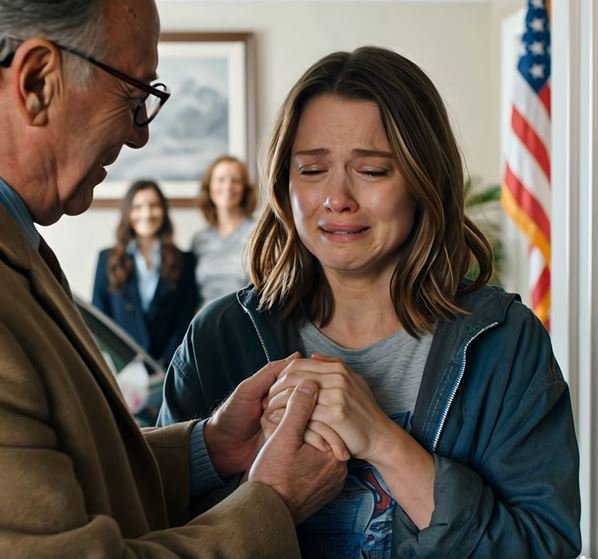
My grandfather, Harold, a man of few words and keen observation, saw the fallout. During a visit, he looked past my feeble assurances and asked the right questions. Learning the full story—the denied surgery, the gifted car—he didn’t offer platitudes. He made a declaration: “I’ll take care of it.” His calm certainty was the anchor I hadn’t realized I was missing.
He orchestrated a confrontation at his Sunday dinner. After the meal, he stood and changed the trajectory of our family’s story. He revealed he had altered his will in my favor. Then, with the methodical precision of a prosecutor, he entered two exhibits into the record: my medical file and the bill of sale for the Mercedes. The silent comparison was his entire argument. “Life isn’t about favorites,” he told my speechless parents. “It’s about who needs you and when.” In naming their neglect, he gave me back my voice and my visibility.
What followed was a testament to actionable love. Grandpa took me to a premier hospital, managed every detail, and ensured I received the best care. His vigil during my recovery was a constant reassurance. In the calm of his home afterward, I began a dual recovery—physical and emotional. The distant guilt-trips from my parents and my sister’s shallow apology lost their power. I had been seen, chosen, and fought for by someone whose love required no performance. My grandfather didn’t just provide financial rescue; he offered a radical redefinition of family. He proved that sometimes, the person who saves you isn’t the one bound by duty, but the one guided by equity and love, the one who looks into the shadows and says, “I see you, and you matter.”