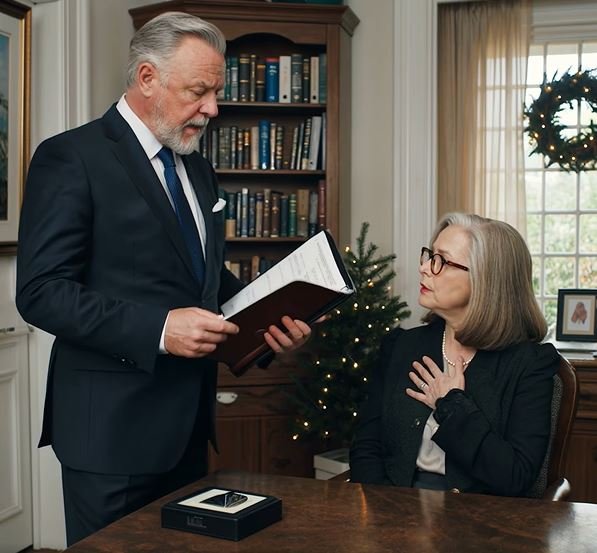
After the last shovel of dirt fell on Margaret’s grave, I returned to what I thought was my home to find it had become a courtroom. My husband, his sister, and their lawyer delivered a verdict: my ten years of caregiving were worth a paltry $5,000, and I was to be evicted. The shock was a physical blow. But as I stood in that doorway, a strange calm settled over me. I thought of the envelope tucked in my suitcase, Margaret’s final secret. I knew the game was not over; it had only just begun, and she had already written the winning move.
For a decade, I had been the silent backbone of the family, the one who handled the mess and the heartbreak while Ryan and Chloe built their lives elsewhere. Margaret, bedridden but sharp, observed it all. She knew their love was conditional and their loyalty fleeting. So, she crafted a plan. Her genuine will, hidden in a bank box, named me her sole heir. A video statement left no room for interpretation: I had earned her legacy through relentless love and service. She predicted their betrayal and armed me with the tools to defeat it.
When I presented the real documents to the authorities, their scheme unraveled spectacularly. The forged will became evidence for their prosecution. The law sided with the caregiver, not the opportunists. I regained not just a house, but my autonomy and self-respect. The inheritance wasn’t a windfall; it was back pay and restitution, delivered posthumously by the only person who had truly valued my labor.
I chose to honor Margaret’s gift by paying it forward. The house is now “Margaret’s House,” a community hub offering respite and resources to those in the grueling, thankless trenches of family caregiving. My story is a testament to the quiet power of documented truth and the profound impact of one woman’s gratitude. In the end, the mother-in-law I cared for didn’t just leave me a house. She returned to me my life, my worth, and the courage to build something beautiful from the ashes of betrayal.