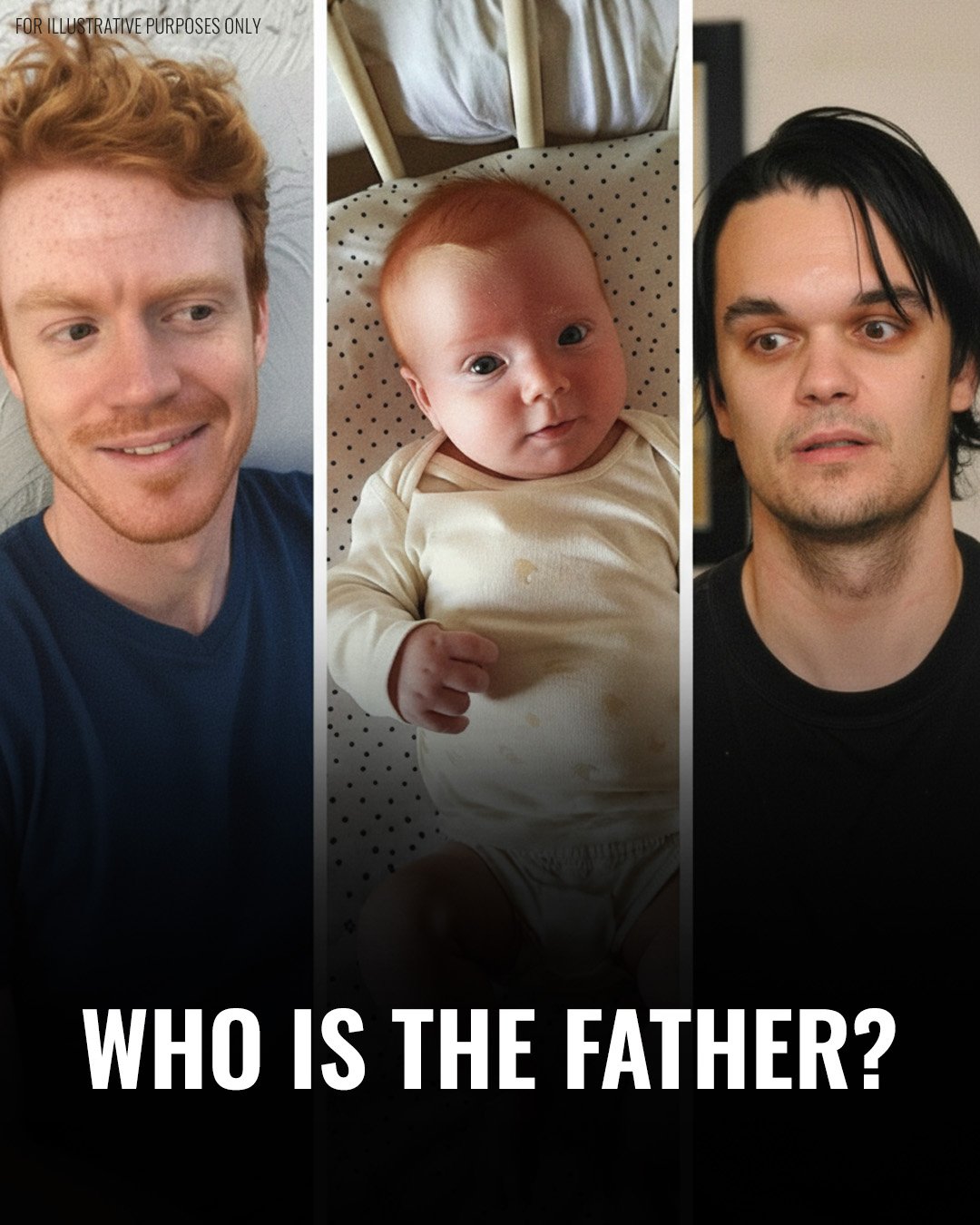
The moment my son was born was supposed to be the happiest of my life. Instead, it plunged me into a whirlpool of doubt and public humiliation. As the doctor held him up, all I saw was a shock of bright red hair—a color nowhere in my family or my wife Emily’s. The silence in the delivery room was broken by my own mother’s accusing cry: “That’s not his baby!” Her finger pointed directly at my wife’s lifelong best friend, Liam, whose fiery red hair matched our newborn’s perfectly. In an instant, joy was replaced by a chilling suspicion that threatened to unravel everything.
In the painful days that followed, the evidence seemed irrefutable. My son’s copper-colored curls and fair, freckled skin were a stark contrast to Emily’s and my dark features. Liam’s constant, helpful presence in our home only deepened the wound, each diaper he changed feeling like a claim staked. The quiet tension grew until I finally confronted Emily, demanding the truth. Her tearful promise that she had never cheated was undercut by a terrifying admission: the real truth was worse. She asked for one day to explain, a day I spent in agonizing limbo, guarding my heart against the worst.
The explanation came not with words at first, but with a journey to a dilapidated house Emily had never shown me—her childhood home. Inside, walking down a dusty hallway, I found the answer staring back from dozens of framed photographs. It was the face of a smiling red-haired boy named Aiden. Emily, trembling beside me, revealed her lost brother, who had died tragically young from a hidden genetic condition. Our son was his mirror image, a living echo of a grief so profound that Emily had buried her entire past to escape it. She had hidden a brother’s memory and her parents’ cruel blame, terrified that history might repeat itself and that her pain would make her unlovable.
The revelation reshaped my world. My anger melted into a profound grief for the young girl my wife had been, shouldering a guilt that was never hers to carry. The red hair was not a mark of betrayal, but a thread connecting our present to her painful past. In a final, unexpected twist, our visit summoned Emily’s estranged mother, whose tearful apology began to mend a bridge broken by decades of sorrow. The baby who caused the crisis became a catalyst for healing, his appearance a chance to confront old ghosts and forgive old wounds.
I learned that family secrets are often prisons built from unspoken pain. My son’s birth didn’t reveal a marital sin; it unlocked a door to my wife’s heart that had been sealed shut by loss. The journey taught me that love isn’t just about sharing a future; it’s about having the courage to embrace the painful, hidden chapters of someone’s past. Our family was forged not in perfect trust, but in the messy, beautiful work of understanding what lies beneath the surface.