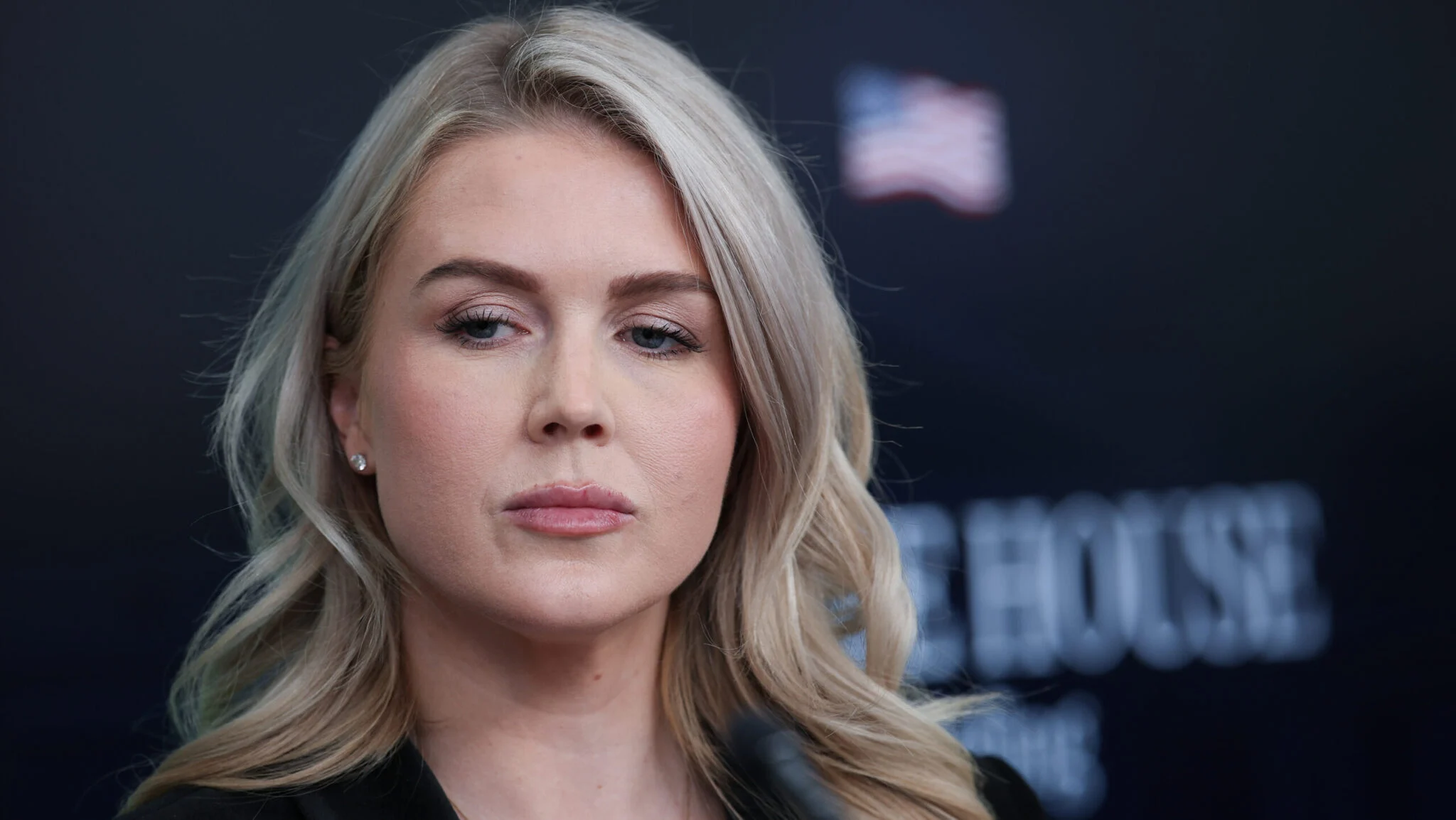
A recent Vanity Fair profile of Trump administration officials has sparked a firestorm online, but the conversation has less to do with politics and more to do with portraiture. The series of stark, close-up photographs, particularly one of White House Press Secretary Karoline Leavitt, has become a focal point for intense scrutiny and debate. The image, showing Leavitt in extreme detail, led many social media users to accuse the publication of a deliberate and petty attempt to humiliate its subject. Comments flooded in, ranging from “jump scare” to critiques about her appearance, with many zeroing in on perceived lip filler marks and remarking on her age. The visceral reaction raised a significant question: when does a portrait cross the line from documentation to characterization?
The backlash was fueled by the perception of collaborative malice. Observers theorized that a whole team—from the photographer and makeup artist to the photo editor—must have “hated” Leavitt to produce such an unflinching image. The detail in the photo was read as an intentional highlighting of flaws, a visual critique disguised as journalism. This interpretation split audiences along predictable lines; critics of the administration saw it as fitting, while supporters labeled it a “political hit piece.” The debate quickly became less about the subject’s role and more about the ethics and intent behind the lens.
View this post on Instagram
Photographer Christopher Anderson, known for his intimate and penetrating style, defended the work. He stated that close-up portraiture is a longstanding fixture of his approach, aimed at piercing the “theater of politics” to find a more human, unvarnished moment. He insisted there was no malicious intent, pointing to a portfolio filled with similarly intimate shots of figures from across the political spectrum. According to Anderson, the style is consistent, not conspiratorial. This defense reframes the conversation from one of targeted humiliation to one of artistic consistency meeting a politically charged moment.
Ultimately, the incident reveals more about the audience than the art. In our highly polarized climate, every image is filtered through a lens of pre-existing allegiance. A photographic style meant to reveal humanity can be instantly weaponized as an attack. The Vanity Fair portrait became a Rorschach test: what some saw as a petty attempt to mock, others saw as a revealing slice of realism, and the photographer saw as his signature artistic pursuit. The controversy underscores that in today’s world, the interpretation of an image is often inseparable from the politics of the person viewing it.