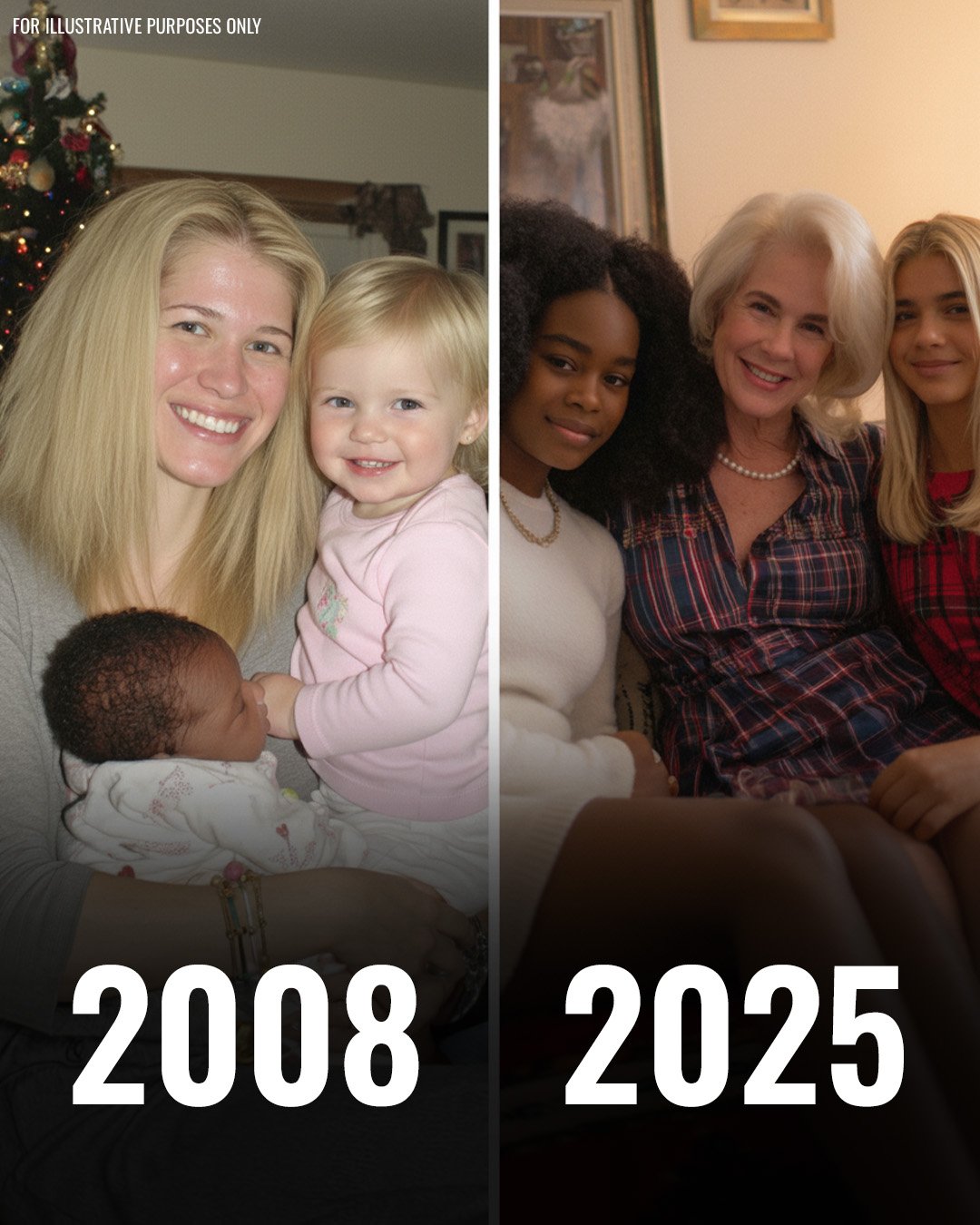
The desire to be a mother was a physical ache, a hollow space nothing else could fill. After five miscarriages, that hollowness had expanded to include my marriage, my hope, and my sense of self. The world seemed full of glowing mothers, a club I was desperately, painfully barred from entering. One night, sitting alone on the cold bathroom floor in the deepest pit of my despair, I did something I’d never done before. I prayed out loud, a raw and desperate bargain. “If you give me a child,” I whispered into the silence, “I promise I will give a home to a child who needs one.” The words felt small and disappeared into the air, unanswered.
But life, in its mysterious way, did answer. Ten months later, my biological daughter, Stephanie, was born. She arrived fiery and loud, a burst of glorious life after so much quiet loss. The joy was overwhelming, a balm on years of grief. Yet, quietly sitting beside that joy was the memory of my promise. It wasn’t a burden, but a quiet calling. On Stephanie’s first birthday, my husband and I signed adoption papers. We brought Ruth home soon after—a quiet, watchful baby who had been found alone on Christmas Eve. In my heart, the equation was simple: my miracle had shown me the vastness of a mother’s love, and now I had more than enough to share.
I raised the girls with the same fierce devotion. “Ruth grew in my heart, but Stephanie grew in my belly,” we would say, and for years, that was enough. But as they grew, their intrinsic differences became a source of tension. Stephanie was all sunshine and confidence, barreling through life and claiming her space. Ruth was more like moonlight—observant, gentle, and prone to making herself small. Loving them equally started to feel complicated, because their needs were not the same. The normal sibling rivalries of the teen years took on a sharper edge, fueled by unspoken insecurities and competition for a spotlight that only one of them seemed to crave.
The fracture came the night of Ruth’s prom. As I stood ready to take her picture, she turned to me with a look of such profound hurt it stole my breath. She told me she was leaving. Through tears, she revealed that Stephanie had told her the truth about my long-ago prayer. In her heartbroken interpretation, she was not a chosen daughter, but a transaction—the kept promise in exchange for the “real” child. The world tilted on its axis. I admitted the truth of the prayer but tried to explain its context: it was born of desperation, not calculation. The promise didn’t create my love for her; it simply pointed me toward where my overflowing love could go.
She left anyway, and the following days were an agony of silence. Stephanie, wrecked with guilt, confessed she’d overheard me speaking of the prayer and had weaponized it in a moment of spite. We were a family unraveling from a single, twisted thread. When Ruth finally returned days later, standing hesitant on the porch, she voiced the pure, simple truth that had been clouded by pain. “I don’t want to be your promise,” she whispered. “I just want to be your daughter.” In that moment, holding my weeping girl, I understood that while my promise had built our family, it was our daily, chosen love that would have to rebuild it. The journey back to trust would be long, but it began with that embrace, and the reaffirmation of a bond that was always meant to be more than a bargain.