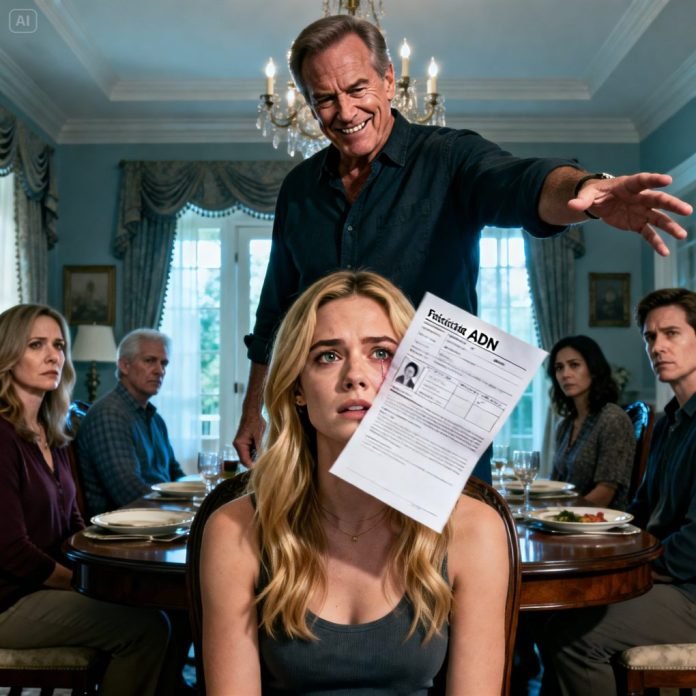
Birthdays are meant for celebration, but my twenty-seventh was different. The air in my family’s dining room was thick with tension. After the cake was cut, my father, Richard, slid a small box toward me. It was a DNA test kit. “Maybe this will finally explain why you’re the mistake of whatever man in this family you came from,” he said, his voice low and cruel. The insult wasn’t new—I’d spent a lifetime hearing whispers about not fitting the family mold—but this public gesture felt like a final verdict. I took the box, my hands steady, refusing to give him the satisfaction of seeing me break.
That night, alone, I used the kit. A part of me, despite my resolve, needed to know. When the results confirmed Richard was not my biological father, I stored the information away, a quiet secret. Life continued for a few months, until a formal letter arrived from the family’s estate attorney, Margaret Doyle. It summoned my parents and me to an urgent meeting concerning me. No details were given.
The atmosphere in Margaret’s office was icy. My parents looked pale and anxious. Margaret began calmly, explaining that my recent DNA test had triggered a legal alert connected to a long-dormant trust established by my grandfather, William. As she laid out the documents, the devastating truth emerged. My biological father was not Richard, but his own father, William. A decades-old affair, hidden by nondisclosure agreements and a web of lies, was the real story of my origin. I had been raised as Richard’s daughter to maintain the family’s pristine image.
The legal ramifications were immediate and staggering. The private trust, created by William, named me—his verified biological heir—as the sole beneficiary. Its value surpassed Richard’s own portion of the main estate. The tool meant to humiliate me had instead unlocked my inheritance and upended the family’s power structure. In that moment, I ceased to be the “family mistake” and became, in the eyes of the law, the fulfillment of a hidden plan.
The aftermath was a storm of rage, guilt, and manipulation. Richard vacillated between fury and desperate pleas. I hired my own lawyer and moved forward with quiet determination. The trust gave me financial independence, but more importantly, it gave me the freedom to redefine my place. I wasn’t celebrating a windfall; I was grieving a childhood built on a foundation of deception. With the resources, I chose to fund causes that aligned with my values, reshaping the Harrington legacy into something I could believe in.
That birthday gift, intended to weaponize truth, ultimately set me free. It taught me that belonging isn’t dictated by blood or name-calling, but by the courage to face the truth and build an authentic life from its pieces. The secret meant to control me became the key to my independence.