The mountain was a place of deep quiet, bought by a woman who wanted nothing more than to be left alone. Evelyn Cross arrived with little fanfare, a solitary figure against the vast, untamed landscape. She paid for her eight hundred acres in full and asked only for silence, a request that the small town at the base of the slopes found impossible to grant. Whispers followed her—tales of a reclusive heiress, a paranoid survivalist, a fugitive from her past. Evelyn offered no corrections. She simply went about building a life of deliberate calm, her movements efficient, her eyes missing nothing. The peace she sought was hard-won, a sanctuary carved out after a lifetime of following orders in far more dangerous places. She reinforced her cabin, studied the wind patterns, and eventually erected a tall fence. To the townspeople, it seemed like an act of fear. To Evelyn, it was the bare minimum required for a life where she controlled what came next.
The past is a shadow that never fully leaves. Evelyn had been a Navy SEAL sniper, a role that leaves marks deeper than any scar. She carried the memory of a mission gone wrong, of a partner lost, and of a system that preferred to quietly sideline those who had seen its failures up close. She left that world without drama, seeking a place where the rules were her own. The mountain represented that simple, profound need: no surprises. Her perimeter, with its cameras and sensors, wasn’t about paranoia. It was the product of experience, a way to finally use her hard-earned awareness to guard peace instead of navigating war. The only person who seemed to understand this was Eleanor, an older woman with sharp eyes and a respectful distance, who brought a casserole one night and asked no prying questions.
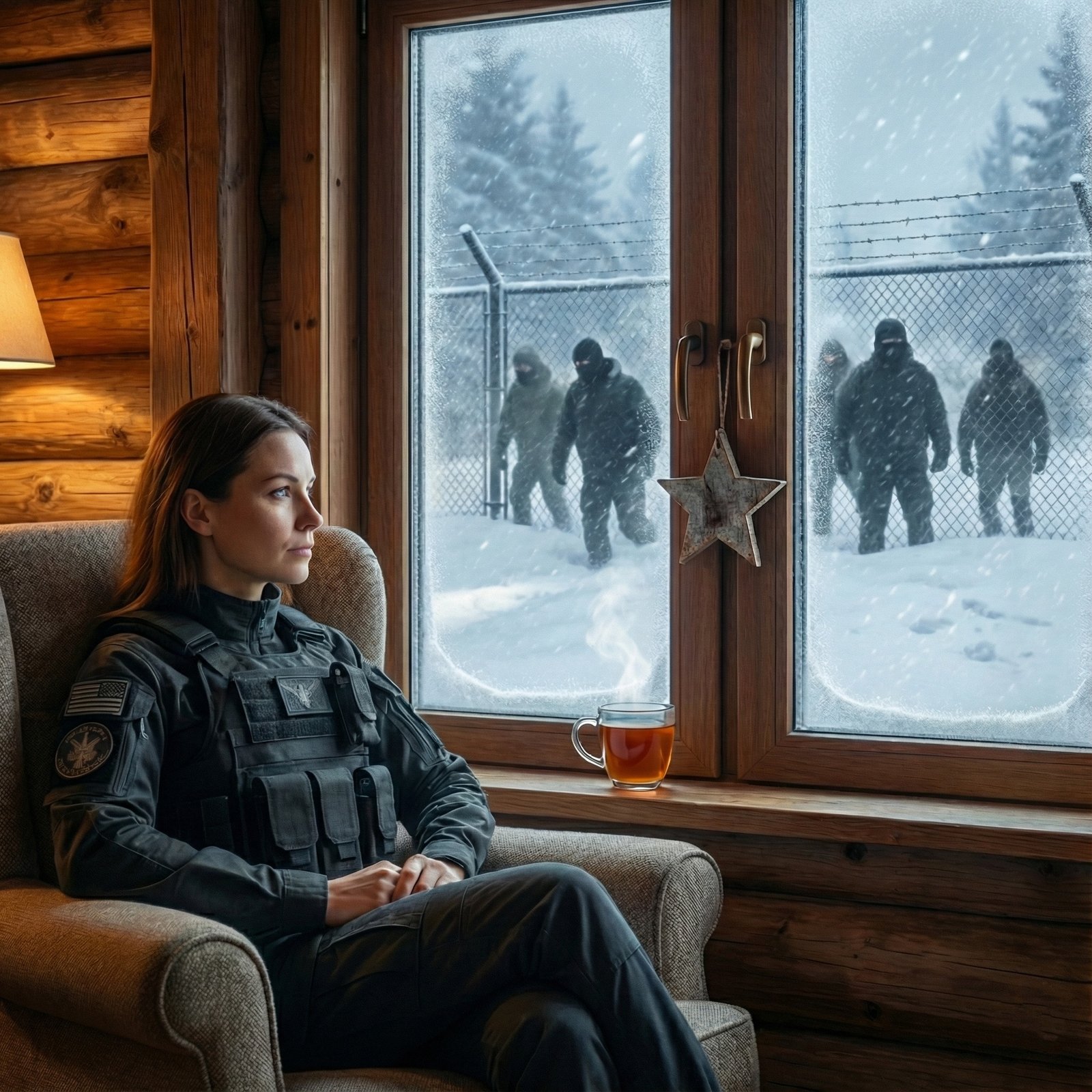
The test came on a brutal Christmas Eve, as a storm wrapped the mountain in howling wind and driving snow. Alerts chimed quietly in Evelyn’s cabin. On the screens, five men moved through the trees with a precision that had nothing to do with holiday hunting. They probed her fence line, tapped the posts, and looked directly into her cameras. They were professionals, and their message was clear: they knew she was there, and they were not impressed. Evelyn’s first, trained instinct was to control the situation. Her second, civilian instinct was to call for help. She knew how that would go—slow response, polite dismissal, paperwork filed long after the damage was done. She watched them leave, and the quiet in her cabin changed. It now had a sharp, waiting edge.
The confrontation, when it came, was not a battle but a lesson. More men returned, moving with coordinated confidence. Evelyn met them not with panic, but with a sniper’s calm control. She didn’t fire at flesh. Her shots shattered their lights, plunged them into disorienting darkness, and struck the earth perilously close to their bodies. She herded them with precise, intimidating fire, using the terrain and the storm to amplify their fear and confusion. One man was wounded, but not killed. The message was one of overwhelming capability paired with shocking restraint. She could have ended them all, but she chose to let them retreat, stumbling back into the night carrying the lesson that this land was defended by someone who held all the cards. As they vanished, Evelyn felt the weight of the choice she had made, the conscious step back from the brink of becoming what she had fought so hard to leave behind.
Aftermaths are often quieter than the events that cause them. When law enforcement finally arrived, Evelyn presented flawless documentation—timestamps, sensor logs, a clean accounting. The discovery of her past, hinted at by a federal ranger who recognized her capability, shifted everything in the small cabin. The deputies’ posture changed from suspicion to a sober, unspoken respect. They realized she hadn’t just stopped a trespass; she had prevented a cycle of violence. In the years that followed, her evidence helped dismantle the poaching network for good. The mountain slowly healed, becoming a protected preserve. Evelyn’s fence remained, but her door opened more often. The woman who bought the mountain for silence became its quiet guardian, proving that true peace isn’t the absence of conflict, but the disciplined, daily choice to protect it.