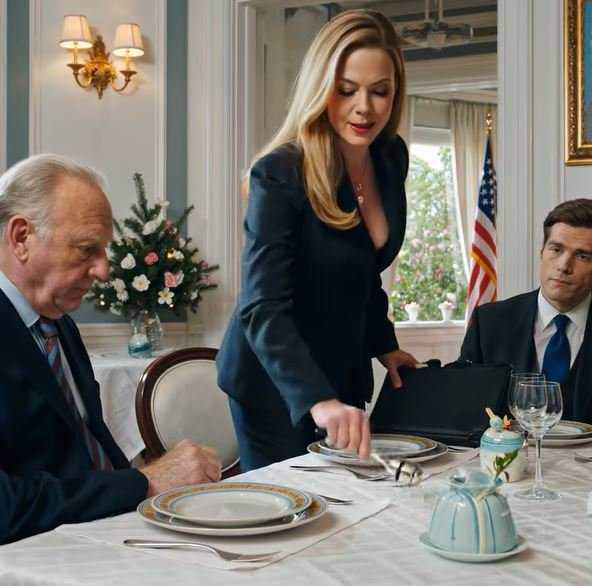
For twenty years, I was the foundation upon which my family built their lives. I was Olivia, the reliable one, the financial analyst whose success was treated not as an achievement, but as a shared family resource. My parents, Alfred and Helen, lived in a beautiful colonial home and drove a luxury car. My brother, Steven, chased one failed artistic venture after another. I paid for it all. The mortgage, the lease, the utilities, even the vacation fund—every line item on their comfortable life was signed by me. I believed it was my duty, my sacrifice. That belief shattered at our Easter brunch.
The ambush was exquisitely planned. Over ham and asparagus, my father, a retired ethics professor, declared that I would be paying off my brother’s $200,000 debt to a shady financier named Marco. “You’ll be paying—no questions asked,” he stated, as if reading a verdict. My mother simply smiled. They saw it as a foregone conclusion, a minor withdrawal from the family bank—me. For the first time in my life, I did not see a request. I saw a final, staggering entitlement. The years of quiet subsidies had warped their reality. They genuinely believed my money was theirs to command.
I had come prepared. In the stunned silence that followed his decree, I stood up. I reached into my briefcase and placed a set of car keys on the linen tablecloth. “Then I guess this house,” I said, my voice calm and clear in the ornate dining room, “and this car are going with me. Family means choices.” The keys gleamed under the chandelier, a silent, metallic counterpoint to their demands. The confusion on their faces was instantaneous. They did not understand the language of ownership, only the language of obligation.
What followed was not an emotional plea, but a forensic dismantling. I presented the files: the deed to their house in my name, the car lease I paid, the joint savings account Steven had been draining for his fictional tour. I laid bare the financial fiction they had enjoyed for over a decade. The real trap, however, was for Marco. I revealed I had already reported his fraud to the SEC, neutralizing the threat that had prompted their panic. Their strategy to save the family name had only accelerated its exposure.
In the end, I sold the house. My parents moved to a small apartment. Steven got a real job. The relationship that remains is quieter, built on a new and painful honesty. I took the vacation to Italy I had always funded for others, this time for myself. My story is a ledger finally balanced. It proves that the deepest form of self-respect sometimes requires closing the accounts others have kept open for too long, and that the word ‘family’ should be a bond, not a binding contract.