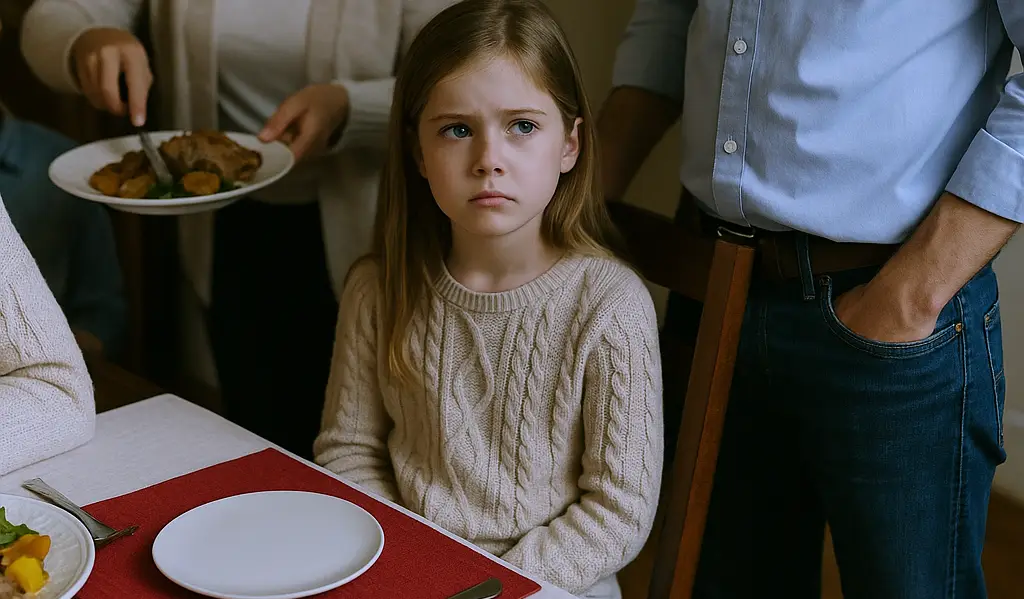
The holidays are meant to be a time of warmth and togetherness, but sometimes they reveal the coldest truths about family dynamics. For one father, a Christmas dinner became the final straw in a long pattern of hurtful behavior. He watched as his mother deliberately set the table with one glaring omission: there was no plate for his seven-year-old daughter, Lily. The reason given was as cruel as the act itself—the little girl had supposedly upset her cousin earlier. While that favored grandson received second helpings, his daughter sat with empty hands and a confused heart. In that moment, a lifetime of being the reliable, quiet son evaporated, replaced by the fierce clarity of being a father.
This wasn’t an isolated incident. The man, let’s call him Alex, had always been the family’s problem-solver. He was the one who showed up early, fixed what was broken, and quietly covered financial shortfalls. His brother, in contrast, was perpetually “between jobs,” yet his son was treated as the golden child. The family’s appreciation for Alex seemed conditional on his usefulness and his silence. The adoption of his daughter, initially met with framed photos, had slowly become a point of subtle othering, a way to mark her as not quite fully part of the family. The empty place setting was simply the most visible sign of a deep-seated exclusion.
The decision to leave was instantaneous. Without raising his voice or causing a scene, Alex gathered his wife and daughter, collected the gifts they had brought, and walked out into the cold night. The silence in the car was heavy, but it was a silence of solidarity, not of defeat. He had chosen his daughter’s dignity over his parents’ approval. The real test, however, came later that night in the form of a text message from his father: “Rent due tomorrow.” This wasn’t a request; it was a demand, a reminder of the financial leash they used to maintain control.
In the days that followed, Alex had to build a new kind of family structure—one built on boundaries, not obligation. He compiled a list of the “loans” he had made over the year that were never repaid. He declined to pay his parents’ rent. He communicated clearly that he would no longer participate in events where his daughter was treated as less than. The backlash was immediate and intense, cycling through guilt, anger, and accusations of selfishness. But for the first time, the noise from his family of origin was quieter than the need to protect the family he had chosen to create.
The journey to a healthier relationship was slow and imperfect. It required his parents to acknowledge their hurtful behavior and make a genuine effort to change. At a subsequent family dinner, a place was set for Lily, with a handwritten name card adorned with a star. It was a small gesture, but it represented a monumental shift. The lesson here is universal: love should not come at the cost of your child’s self-worth. Being a parent means sometimes being the quiet anchor, and other times being the unmovable wall that shields your child from harm. True family is where everyone, without exception, gets a plate.

