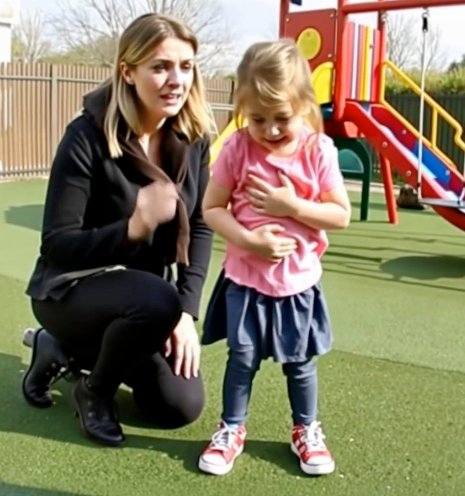
The morning began like any other, with the familiar hum of children settling into their seats. For one little girl, however, the simple act of walking was a visible struggle. Her pained, shuffling steps across the classroom floor immediately caught her teacher’s attention. It was more than just a clumsy morning; something was deeply wrong. When the teacher looked closer, she saw the tell-tale signs on the child’s clothing—signs that spoke of a hidden, urgent suffering. Without a moment’s hesitation, the teacher picked up the phone and dialed 911, setting in motion a chain of events that would change lives.
As paramedics arrived and carefully escorted the young student, Emily, out of the building, the teacher, Rachel, was left with a classroom full of wide, worried eyes. She took a steadying breath, her own heart racing, and turned to her students. She explained in calm, reassuring terms that their classmate was getting the help she needed. The children, sensing the gravity of the moment, offered their quiet hopes and well-wishes. Rachel guided them through the rest of the day’s lessons, but her mind was tracing back over the previous weeks, questioning if there had been other, subtler signs she had missed in Emily’s behavior.
Once the school day ended, Rachel knew her role was not over. She sat at her desk and began making the necessary, difficult calls. She reached out to the school counselor to ensure Emily would have emotional support upon her return. Then, she contacted child protection services, providing a detailed account of her observations—Emily’s recent withdrawal, her reluctance to participate in physical activities, her quiet demeanor. Each piece of information was a potential clue, and Rachel was determined to ensure the little girl would not slip through the cracks.
That evening, the weight of the day settled heavily on Rachel’s shoulders. As she sat in her quiet kitchen, she made a silent vow to Emily and to every child who might be suffering in silence. This incident could not be a one-time intervention; it had to spark a change. In the following days, Rachel channeled her concern into action, organizing meetings with fellow educators to discuss how they could become more vigilant and create a school-wide system of support, ensuring every child felt seen and safe.
Emily’s painful walk into the classroom became a turning point, not just for her, but for the entire school community. It underscored the profound responsibility teachers carry—they are not just instructors of curriculum, but often the first line of defense for a child in crisis. Rachel’s quick response and subsequent advocacy transformed a moment of alarm into a lasting commitment, proving that the most important lessons are sometimes about paying attention to the silent pleas for help.