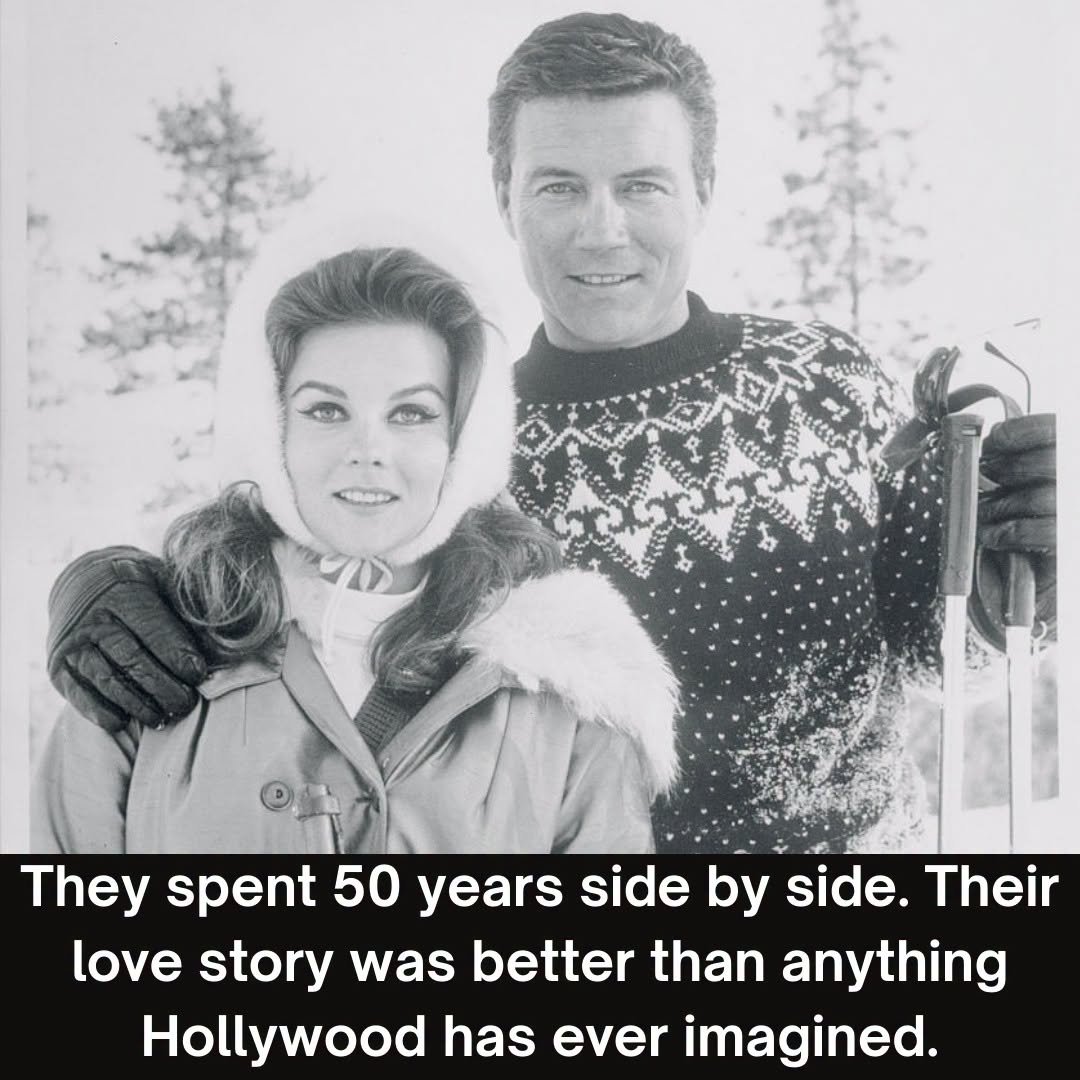
PROLOGUE: BEFORE THE FALL, THERE WAS LIGHT
Hollywood in the 1960s was a world of sparkle.
Lights.
Music.
Applause.
And faces designed to look untouchable.
Among them stood Ann-Margret — a performer so electric that audiences believed she was made of pure motion and confidence.
She danced like fire.
She sang like joy.
She smiled like nothing in the world could ever break her.
But behind the spotlight, she carried something far quieter.
Something fragile.
A fear she never fully spoke about.
A fear of being left behind.
And that fear would one day meet gravity.
CHAPTER 1: THE GIRL FROM SWEDEN AND THE WEIGHT OF DISTANCE
Before Hollywood, before fame, before Elvis Presley…
Ann-Margret was just a girl in Sweden.
A girl whose father left to work in America.
A girl who waited years for his return.
Five years is a long time for a child.
Long enough for love to become uncertainty.
Long enough for silence to feel like abandonment.
Even after she reunited with him, something inside her never fully stopped waiting for people to leave again.
That emotional imprint became invisible fuel for everything she would later become.
Because performers are not created in comfort.
They are shaped in absence.
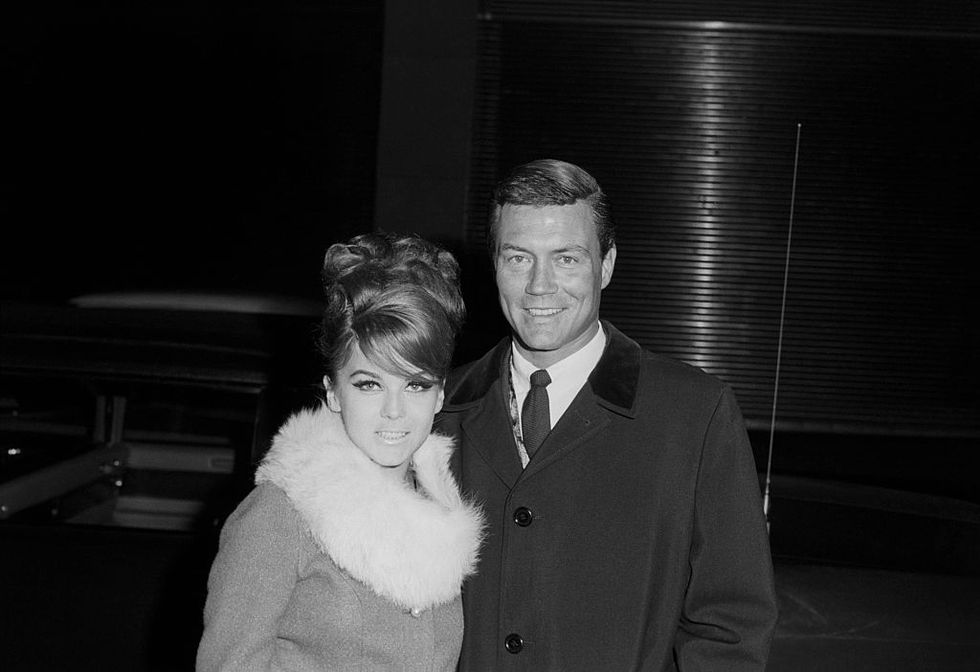
CHAPTER 2: AMERICA DISCOVERS A FORCE OF NATURE
When Ann-Margret arrived in Hollywood, she did not simply enter the industry.
She exploded into it.
Her energy was different.
Uncontained.
Unfiltered.
Unpredictable.
Films like Bye Bye Birdie and Viva Las Vegas made her a household name.
Her presence alongside Elvis Presley created one of the most iconic screen pairings of the era.
Audiences saw glamour.
Studios saw profitability.
But Roger Smith saw something else entirely.
He saw a person trying to stay grounded in a world designed to lift her too high to stand steadily.
CHAPTER 3: THE ACTOR WHO UNDERSTOOD SILENCE
Roger Smith was not new to fame.
He had starred in 77 Sunset Strip, playing a smooth, composed private investigator.
On screen, he solved problems.
In real life, he had already survived his own battles.
A brain clot.
Major surgery in 1962.
A failed marriage.
Three children depending on him.
He knew what it meant to appear calm while carrying internal instability.
That made him different from the men Ann-Margret had met before.
He did not try to impress her.
He understood her.
And understanding is rarer than admiration.
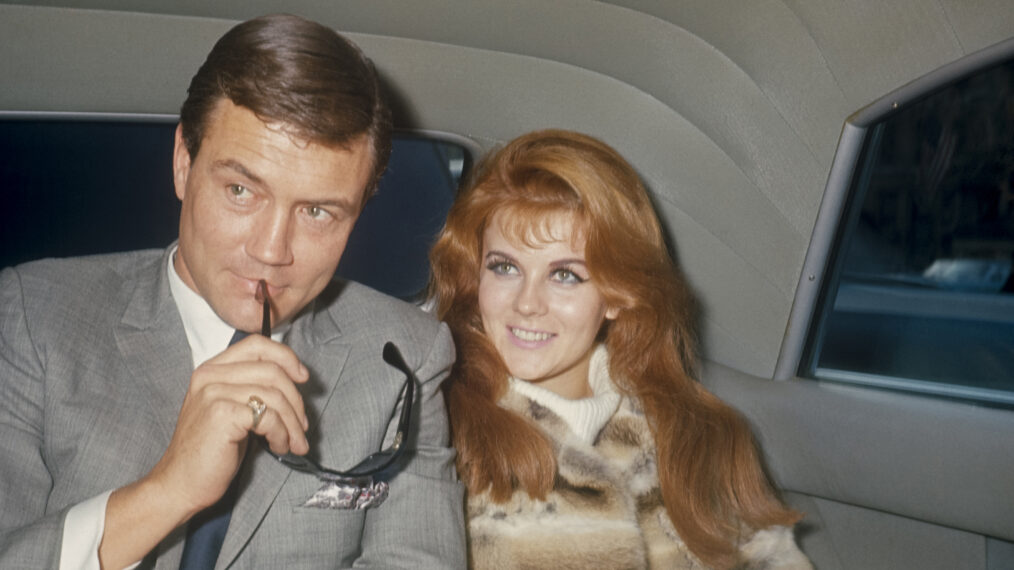
CHAPTER 4: THE FIRST MEETING — WHEN TWO WORLDS RECOGNIZED EACH OTHER
They met in the mid-1960s.
He invited her to a nightclub performance in San Francisco.
There was no spectacle.
No Hollywood production.
Just conversation.
Then dinner.
Then something quieter:
recognition.
By their third date, something had already settled between them.
Not excitement.
Not infatuation.
But certainty.
The kind of certainty that does not ask permission from logic.
CHAPTER 5: LOVE AGAINST DOUBT
Not everyone approved.
Her parents had questions.
Her father worried about divorce history.
Her mother worried about stability.
Hollywood worried about control.
But Ann-Margret did not hesitate.
Because she had already spent a lifetime waiting for something solid.
And Roger Smith felt like solidity.
Not dramatic love.
Not cinematic romance.
But something far more rare:
reliability.

CHAPTER 6: MAY 8, 1967 — A QUIET WEDDING, A LOUD EMOTION
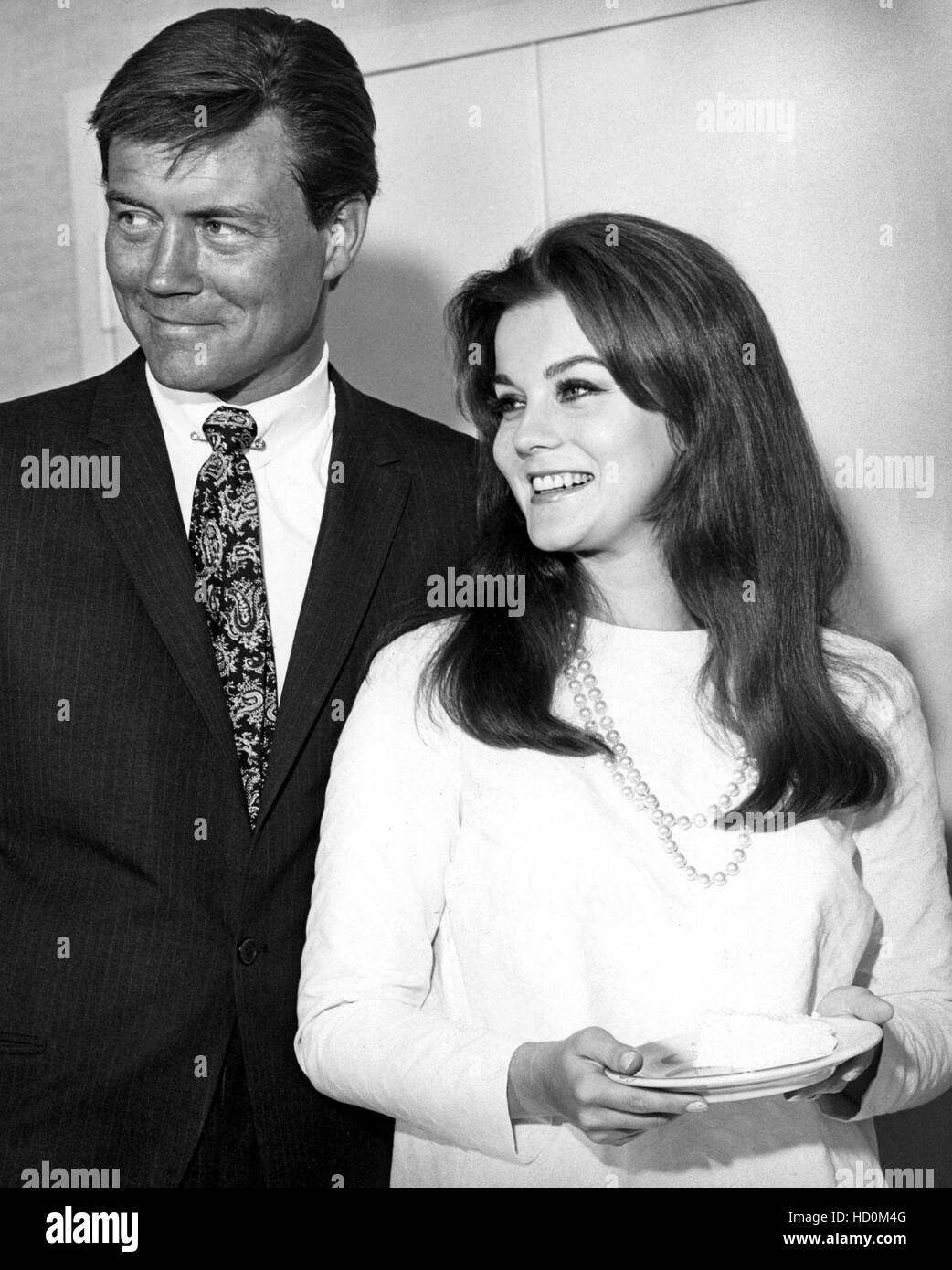
They married at the Riviera Hotel in Las Vegas.
No grand spectacle.
No public declaration.
Just a civil ceremony.
But emotion cannot always be contained by scale.
Ann-Margret cried through much of it.
Not because of doubt.
But because certainty itself can be overwhelming when you have lived with uncertainty for too long.
For her, marriage was not a performance.
It was safety.
CHAPTER 7: WHEN HE BECAME HER SHIELD
After marriage, Roger Smith did not remain a distant Hollywood husband.
He became deeply involved in her life.
He managed her career.
He guided her decisions.
He protected her from industry exploitation.
He saw that her talent was not limited to the “brilliant entertainer” label Hollywood had placed on her.
He helped her move toward serious acting roles, including Carnal Knowledge, which earned her critical acclaim and an Oscar nomination.
But beyond career, he did something more important:
He became her emotional boundary against a world that constantly demanded more.

CHAPTER 8: THE FALL — SEPTEMBER 1972
Then came Lake Tahoe.
A stage.
A performance.
A moment that should have been ordinary.
And then—
twenty-two feet of accidental fall.
Her body hit hard.
Her face fractured.
Her arm shattered.
The injury was severe enough that doctors prepared for immediate surgical intervention that could have left visible scars.
In that moment, everything she had built could have changed.
But Roger intervened.
Fast.
Decisive.
Unshaken.
He arranged for immediate transfer to Los Angeles.
A specialist performed a more precise internal procedure that preserved her appearance and her ability to continue performing.
That decision did not just save her health.
It preserved her career identity.
CHAPTER 9: RECOVERY — AND THE STRIPPING AWAY OF ILLUSION
Recovery was slow.
Painful.
Humbling.
She received thousands of letters from fans.
She responded personally.
Something shifted during that time.
The accident stripped away vanity.
It replaced image with awareness.
And what remained was clarity:
what matters is not applause.
It is survival.
CHAPTER 10: WHEN THE ROLES REVERSED
Years later, Roger Smith faced his own battle.
Myasthenia gravis — a chronic autoimmune condition that weakens muscles over time.
The strong protector now needed care.
The man who had once stabilized her career now needed stability himself.
But love, when real, does not reverse direction.
It adapts.
She adjusted her life.
Her schedule.
Her travel.
Her priorities.
When he could, he attended her performances.
When he could not, she stayed with him.
No resentment.
No collapse.
Only adjustment.
CHAPTER 11: A MARRIAGE WITHOUT AUDIENCE
They had no children together.
But she became part of his children’s lives.
Not as a stepmother in name.
But in presence.
Their relationship was not defined by public visibility.
It was defined by private consistency.
No spectacle.
No performance.
Just repetition of care.
Day after day.
Year after year.

CHAPTER 12: THE DEFINITION OF LONG LOVE
When asked about their marriage, Ann-Margret did not speak in poetic terms.
She did not romanticize it.
She simplified it:
They both wanted it to work.
They stayed.
They chose each other repeatedly.
That is not glamorous.
But it is rare.
CHAPTER 13: THE FINAL YEARS OF ROGER SMITH
Roger Smith passed away on June 4, 2017.
He was 84.
Only weeks earlier, they had celebrated 50 years of marriage.
Half a century.
Not of perfection.
But of continuity.
A rare thing in Hollywood.
A rarer thing anywhere.
EPILOGUE: WHAT HOLLYWOOD NEVER UNDERSTOOD ABOUT THEM
Hollywood often tells love stories in extremes:
passion or collapse,
glory or tragedy.
But Ann-Margret and Roger Smith lived in something else:
stability.
And stability does not sell headlines.
But it builds lives.
He caught her when she fell.
She held him when he weakened.
And together, they proved something simple but profound:
love is not what you feel in the spotlight.
It is what you maintain when the lights go out.