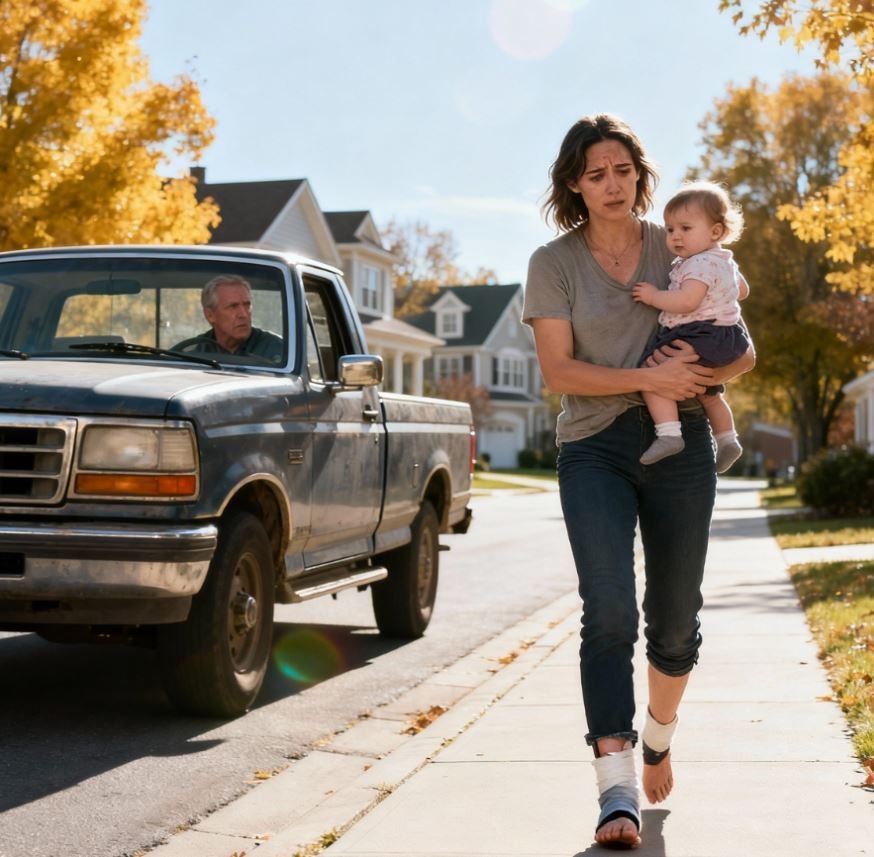
It was a simple, painful sight: a young mother limping down a suburban street, her baby on her hip, on a cold October day. My father, driving by, saw me. He pulled over and asked one question: “Where’s your car?” The answer, that my mother-in-law had taken it, was the thread that unraveled an 18-month nightmare. I had believed losing my car, my job, and my independence was the price of being a good wife and mother. My father saw it for what it was: control. He said, “Get in the car. We’re fixing this tonight.” In that moment, my rescue began.
Back at my father’s house, the full story poured out. After I became pregnant, my mother-in-law, Judith, had suggested I quit my job and move into her home for support. What felt like help became a cage. My car was “borrowed” indefinitely. A tracking app was installed on my phone. My access to our joint finances vanished. I was isolated from friends and family, constantly told I should be grateful for their care. I was a prisoner in a beautiful house, utterly dependent.
With my father’s support, I began gathering evidence in secret. What I found was a calculated plan. Bank statements revealed $47,000 transferred from my marital account to Judith. Text messages showed her instructing my husband to keep me dependent so I wouldn’t leave. I even found a lease for an apartment in only my husband’s name—a future that didn’t include me or our daughter. Armed with this proof, I left in the middle of the night and found a lawyer.
Three weeks later, we were in court. Judith presented herself as a generous matriarch, supported by character witnesses from her church. Then my lawyer presented the evidence: the bank transfers, the damning texts, the secret apartment lease. The phrase “keep her dependent,” read aloud in the silent courtroom, laid bare the truth. The judge granted a protective order, temporary custody, and ordered the return of my money and my car. The gilded cage was shattered.
Today, I have my own apartment, a new job, and full custody of my daughter. The journey taught me that abuse isn’t always physical; sometimes it’s the slow, systematic removal of your autonomy. My story isn’t about revenge, but about reclaiming the right to your own life. Sometimes, freedom starts with one person seeing your pain and asking, “Where’s your car?” and having the courage to answer honestly.