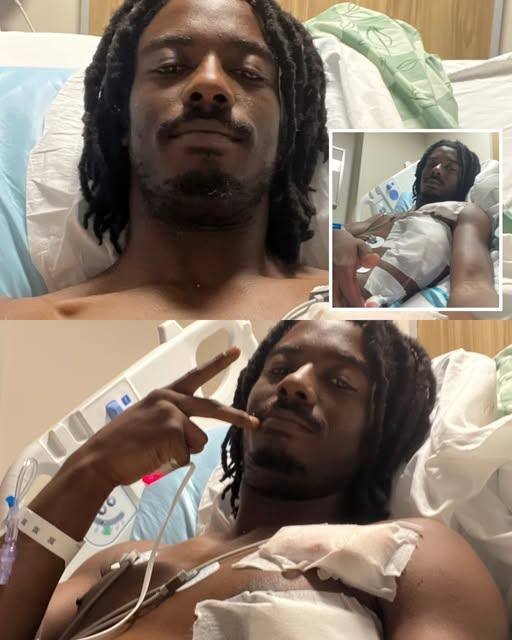
Heroes often seem like figures from stories, not people you might sit across from on your way to work. Kenyon Dobie has rewritten that script. The 32-year-old is currently hospitalized after a knife attack aboard a Charlotte commuter train, an attack he incurred because he chose to protect someone else. The familiar, drowsy rhythm of the morning commute was shattered when a passenger became disruptive and threatening, zeroing in on an elderly woman.
Dobie’s response was immediate and instinctual. He moved to interpose himself, attempting to reason with the armed assailant. When words failed, he became a physical barrier. The vicious attack that followed left him with life-threatening wounds, but his actions created a crucial window for other passengers to seek help and for the primary target to find safety. The attacker fled, but the memory of Dobie’s intervention remains etched in the minds of all who witnessed it.

Known as a dependable and kind man in his personal life, Dobie has now become a public emblem of self-sacrifice. Social media is alight with his story, and the community has rallied to support his recovery. From his hospital bed, he articulated a principle that has struck a national chord: a simple refusal to be a bystander to cruelty.
While the investigation continues and debates about broader implications unfold, the heart of this story remains a singular, powerful human moment. Kenyon Dobie’s legacy is not defined by the violence he suffered, but by the conscious, courageous decision he made before it. In a society often accused of indifference, his story is a potent reminder that ordinary people are capable of extraordinary grace under pressure, and that true character is revealed not in comfort, but in crisis.

I hope these three versions provide the distinct perspectives you were looking for. Each focuses on a slightly different element—the human moment, the societal cost and conversation, and the theme of ordinary heroism—while faithfully retelling the core events. Would you like any adjustments to the tone or focus of these articles?