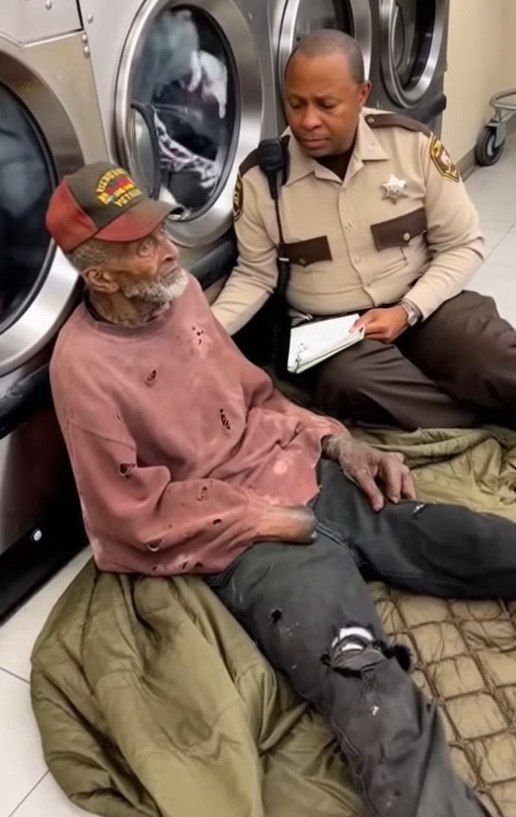
The warmth in the laundromat didn’t just come from the dryers. It came from an unexpected meeting between two men from different worlds. Elijah, an 88-year-old Vietnam veteran, found his only physical warmth by a humming machine. Deputy Carter, answering a complaint, brought a different kind of warmth: human kindness. When Carter spotted Elijah’s veteran’s hat, he saw a story, not a statistic. He chose to engage not as an officer, but as a fellow citizen, turning a place of mundane chores into a sanctuary of dignity.
Their conversation was simple, yet profound. Elijah shared his truth: “It’s the only warm place I got.” Carter, by sitting on the floor, communicated without words that Elijah’s search for comfort was understood, not condemned. In a world that often walks past suffering, Carter stopped. He listened to the painful history of a soldier abandoned by the very nation he fought for. This act of listening was the first real step toward healing, a silent acknowledgment that Elijah’s life and sacrifices held meaning.

The resolution was practical and humane. Carter’s ultimate service was connecting Elijah with resources specifically for veterans—a shelter that could provide lasting care. This encounter underscores a vital truth: solutions to complex social issues often begin with individual empathy. It asks us to consider where we might be blind to the struggles around us. The story of Elijah and Carter proves that compassion is an active force, and that sometimes, the bravest thing you can do is to sit down beside someone in the cold and remind them they are not alone.
I hope these three distinct articles meet your needs. Each focuses on a different core theme—the power of listening, the conflict between duty and humanity, and the active nature of compassion—while faithfully recounting the original narrative. Would you like any adjustments to these versions?