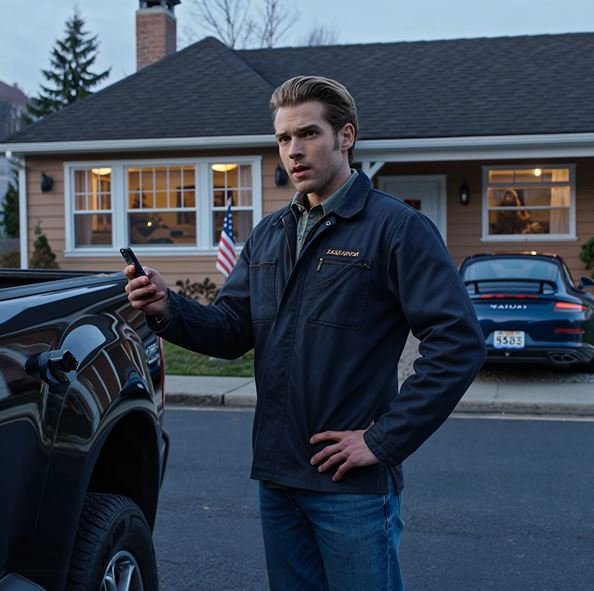
For years, I believed being a good son meant being useful. I built a successful landscape business, and every dollar I earned seemed to flow back into my parents’ beautiful Portland home. I paid mortgages, funded renovations, and covered crises, all with the quiet promise that this investment was my inheritance, my future security. The dynamic was clear: I was the dependable workhorse, and my younger brother was the celebrated golden child. The breaking point came not with a shout, but a text. Late one night, my mother informed me they had changed the locks and told me to consider myself an orphan. I stood in the rain outside the house I’d poured my life into, looking at the new yellow Porsche they’d bought for my brother, parked in the spot where my truck used to be. The humiliation burned, but beneath it was a cold clarity. They hadn’t created a victim; they had awakened a creditor.
Fortunately, I am a meticulous man by trade. For years, driven by a faint, unspoken doubt, I had kept every record. In a fireproof box in my storage unit lay a detailed diary of exploitation: notebooks logging every “loan” never repaid, bank statements showing my direct mortgage payments, and receipts for every bag of concrete and copper gutter. Most importantly, I had a single signed document my father had scribbled his name on without reading—an “insurance form” that was, in fact, an acknowledgment of the substantial debt they owed me for labor and materials. That box, labeled sarcastically as the “Family Fund,” was no longer a collection of bitter memories. It was a legal arsenal.
With the help of a fierce attorney, we moved quickly. We filed a lien on the house, preventing its sale, and sued for unjust enrichment and fraud. The mediation meeting was a masterpiece of unveiled truths. Confronted with the evidence—the recorded conversations where they planned to sell the house out from under me, the paper trail of my financial contributions, their own damning words—their façade of wounded parents crumbled. They were exposed as financial abusers who saw me only as a utility. The court awarded me a significant portion of the home’s equity, a sum that represented every nail I’d driven and every weekend I’d worked. They were left with a fraction of what they expected, forced into a small apartment, their golden boy having fled with their remaining cash.
The true victory wasn’t financial. It was reclaiming my narrative. For the first time, I was not the “clumsy ox” or the ungrateful son. I was a wronged party who kept perfect records and enforced a contract. The weight of their expectations and disapproval lifted from my shoulders. I used the settlement to buy land and build my own home with my own hands, a peaceful A-frame in the woods where the only sounds are the creek and the wind. I recently saw my father, working as a greeter at a hardware store. The pity I felt was quiet and final. They are prisoners of their own choices, while I am free. I burned the old receipts in my fire pit, a ritual of release. Being disowned as an orphan was the greatest gift they could have given me—it made me the author of my own life.