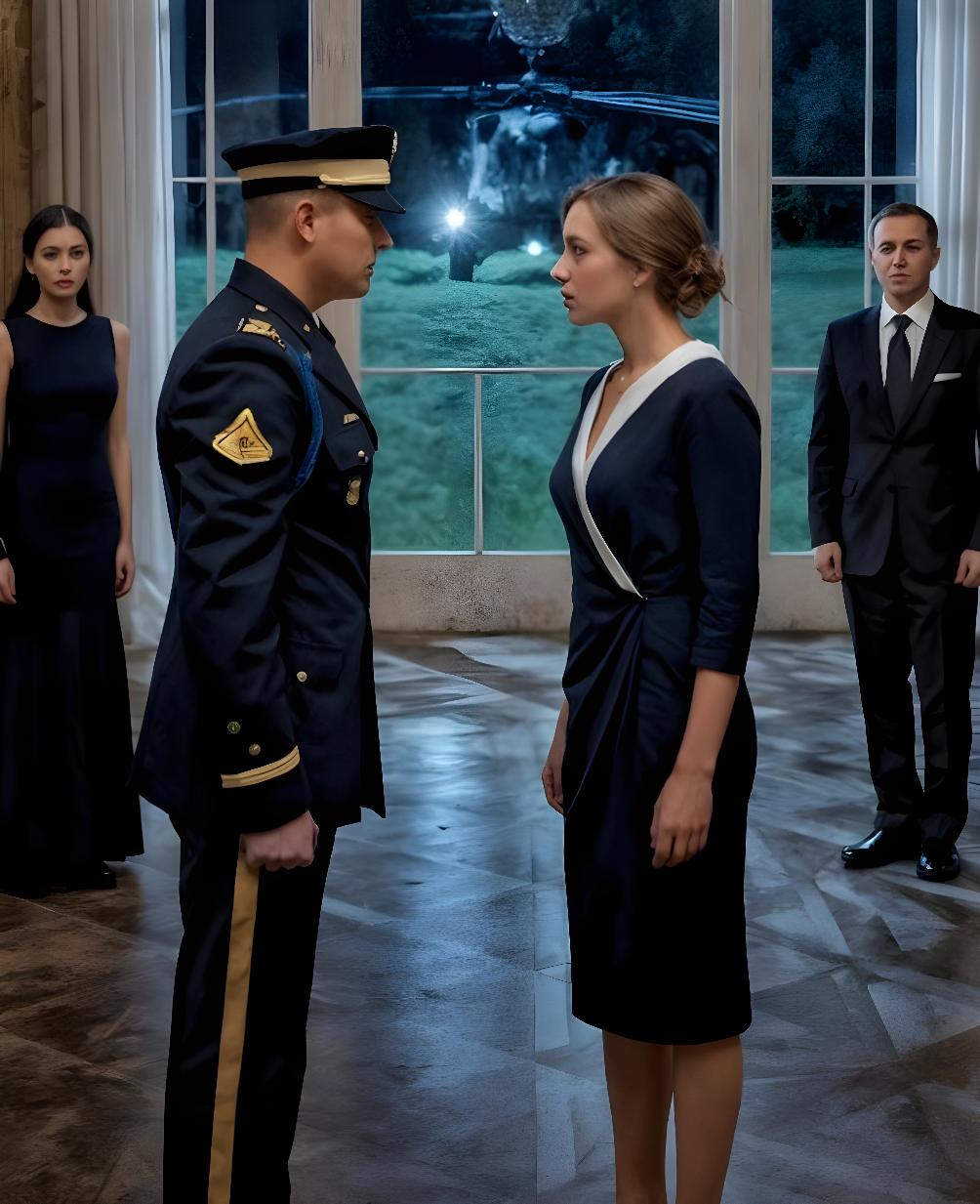
Arriving at my high school alumni gala felt like walking onto a stage where my part had been cut from the script. I entered alone, in a simple navy dress, to a ballroom buzzing with polished reunions. My parents were already holding court by a photo wall celebrating my brother’s Harvard achievements. My face was nowhere to be seen, my accomplishments—student council president, concertmaster—erased. My mother’s greeting was a chilly, “You’ve come?” as if I were an interruption. My father’s gaze slid right past me. I was seated at a lonely table near the exit, a literal afterthought. As toasts began, my father joked that if I were a general, he’d be a ballerina. The room laughed. That laughter was the sound of my entire history being gently, firmly rewritten.
The truth, however, was being unearthed by a friend. She showed me old emails: one from my father requesting my name be removed from school honors due to my “unconventional occupation,” another from my mother falsely withdrawing a Medal of Honor nomination in my name. They hadn’t just neglected me; they had actively sanitized my story to fit their narrative. My service—multiple missions, commendations—was an inconvenient blemish. As I absorbed this, the gala’s noise faded. The real insult wasn’t their indifference; it was their deliberate effort to make me disappear, to preserve a family image that had no room for the person I’d become.
The reckoning arrived not with a shout, but with the thunder of rotor blades. A military helicopter landed on the lawn, and a colonel marched into the ballroom, cutting through the crowd to salute me. “Lieutenant General Dorsey,” he announced, requesting my immediate presence. The room’s frozen silence was more powerful than any applause. As I walked out, a journalist revealed the damning email to the crowd. My parents’ façade crumbled publicly in an instant. The helicopter didn’t just carry me away; it tore a hole in the fiction they’d built.
Later, at the Medal of Honor ceremony, I didn’t look for them in the crowd. The weight of the medal was less than the weight of their years of silence. My name was finally restored on the school’s wall: “Anna Dorsey. Led in silence. Served without seeking the spotlight.” That was the only recognition I needed. Their abandonment taught me the most vital lesson: when you stop waiting to be claimed by those who should know you, you are finally free to claim yourself.