My arrival at the grand Verma estate felt like the final page in a story written by someone else. The sky was a dull gray, matching the heavy silence of the mansion. My stepmother’s final words still echoed in my ears as the car pulled away: “This is your duty, Ananya. Be grateful and be quiet.” I was to marry Rohan Verma, a man I’d never met, a reclusive heir confined to a wheelchair. It was a transaction, plain and simple, arranged to solve my family’s debts.
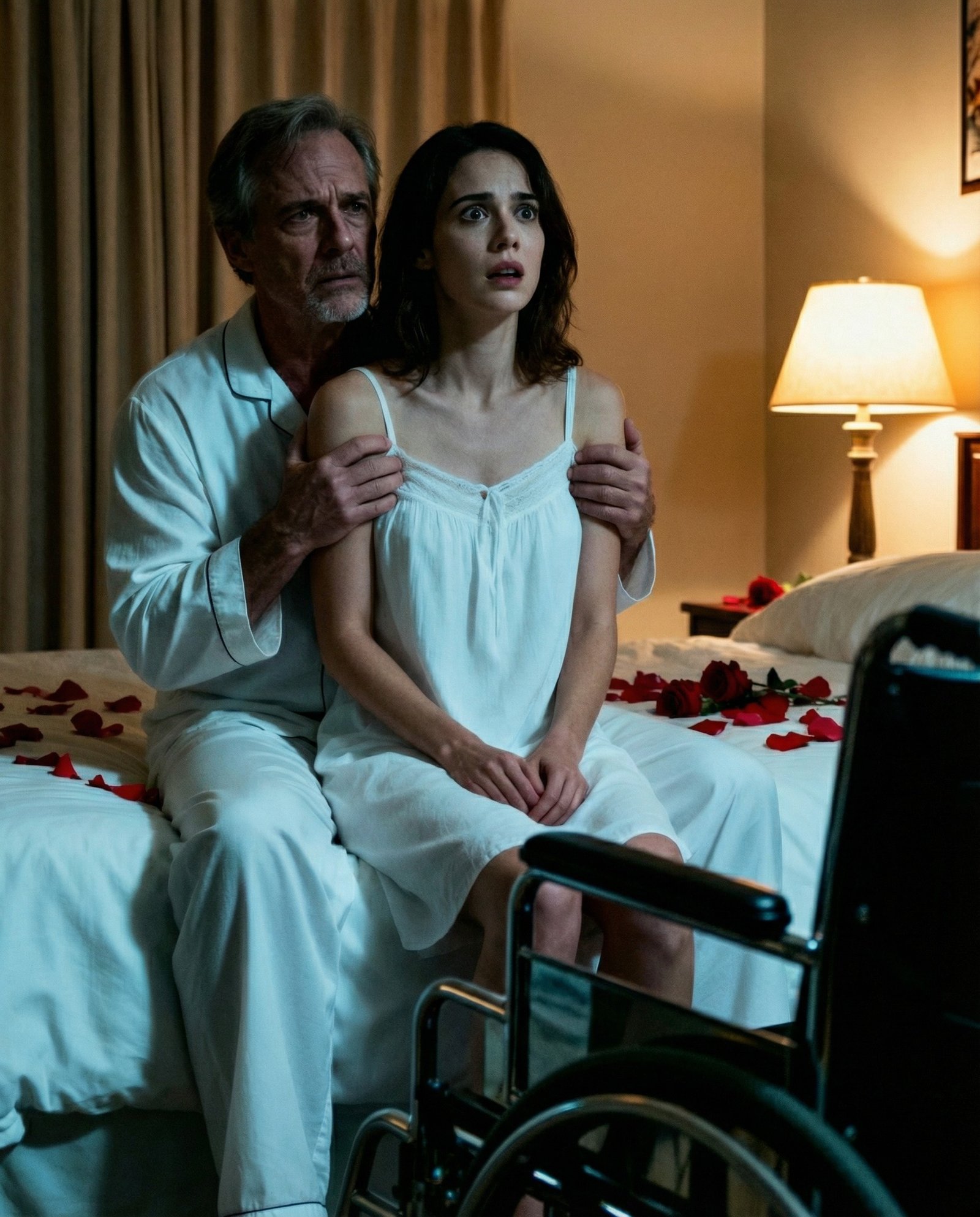
Rohan was as distant as the rumors suggested. Our first meeting was brief. He didn’t look at me with anger or pity, just a deep, weary resignation. “The house is large,” he said quietly. “Live as you wish. I won’t trouble you.” His words were a dismissal, a confirmation that I was just another piece of furniture in his lonely world. The wedding was a formality, and by evening, the cavernous house was empty except for the two of us, strangers bound by a contract.
That first night, the silence became unbearable. Seeing him struggle to turn his chair, I offered to help him to bed. He refused at first, calling himself a burden. But I insisted. As I tried to lift him, my foot caught on the rug, and we tumbled to the floor in a clumsy heap. Flustered, I tried to get up, but then I felt it—a slight, reflexive twitch in his leg beneath the blanket. “You can feel that?” I asked, shocked. He looked away, a sad smile touching his lips. “The doctors said recovery was possible,” he confessed. “But when everyone left, trying seemed pointless.”
That moment changed everything. His confession wasn’t about his legs; it was about his broken spirit. So, I made a silent decision. I began pushing him into the garden each morning, insisting he feel the sun. I asked him about his life before the accident, his dreams. Slowly, I encouraged him to try moving, to hold my hand and attempt to stand. There were falls and frustrations, but each time, I was there. “Why are you doing this?” he asked one day, exhausted. “Because you’re not a burden,” I said simply. “And you shouldn’t have to face the dark alone.”
My stepmother’s visit was a harsh reminder of my old life. She came to collect her “investment.” But before I could speak, Rohan wheeled forward. He handed her a check and said, with a firmness that stunned us both, “You brought her here. For that, I thank you. Now, she stays because she chooses to. You have no claim.” It was the first time anyone had fought for me. Not long after, I woke to find his side of the bed empty. I rushed downstairs, my heart pounding, only to find him in the garden, standing on his own. He turned, his eyes bright. “You healed my legs,” I whispered. He took my hand. “You healed my heart first,” he replied. Our story began with a fall, but it taught us that true strength has nothing to do with walking, and everything to do with having someone who chooses to walk beside you.