For as long as I can remember, I’ve been the fixer. At 37, I’m a neurosurgeon—a career built on calm precision in the face of crisis. It’s a skill I learned young, translating my parents’ financial panic into comforting lies. So, when they celebrated 50 years of marriage, I wanted to fix their lives for good. I bought them a $425,000 cottage by the sea. It was to be a sanctuary of salt air and quiet mornings, a place where their floors didn’t squeak with worry.
I orchestrated the gift like a delicate operation. The deed was placed in a trust, taxes were prepaid, the fridge was stocked. I hid a note in the drawer: “For late mornings and loud laughter.” My parents cried with a relief I’d spent a lifetime trying to give them. For one perfect day, it worked.
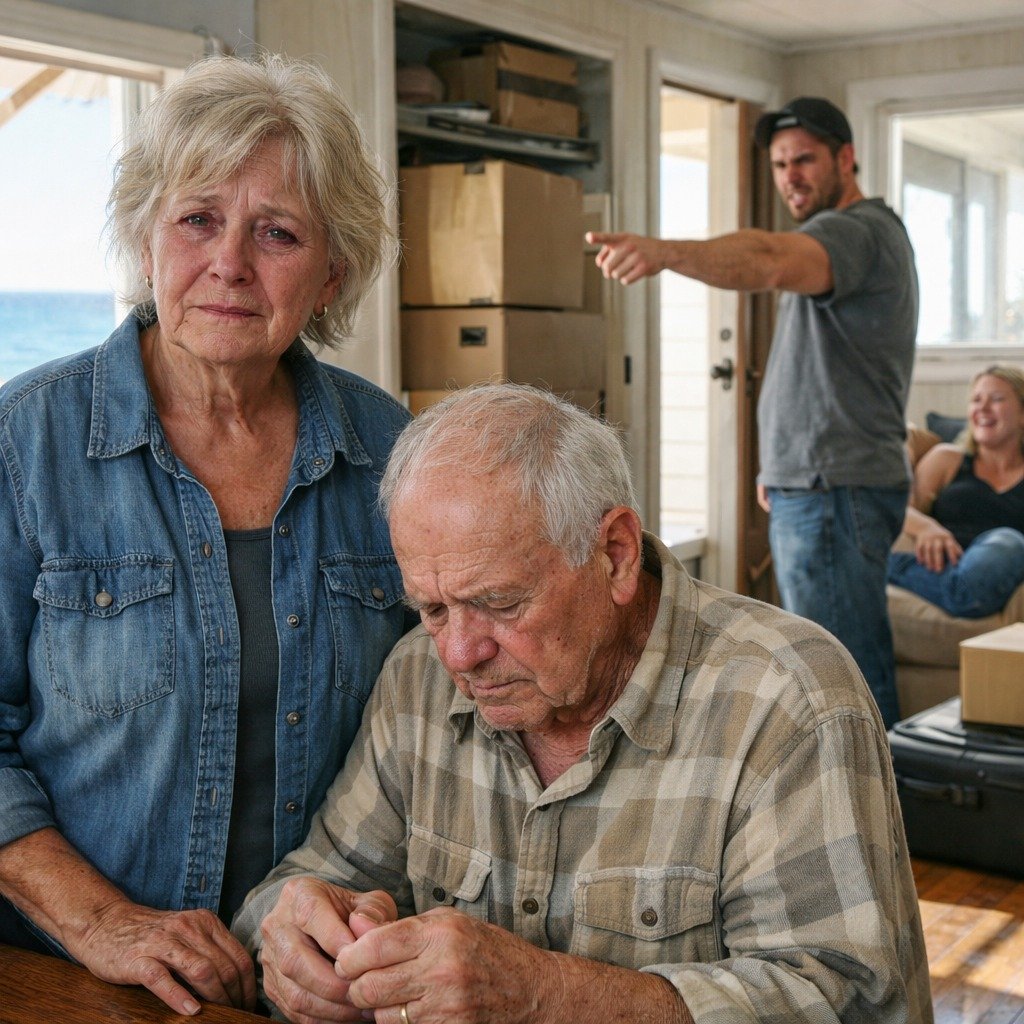
Then my sister, Julia, arrived. She’d sniffed out the secret from a blurry photo online. What began as a “visit” became an invasion. Two days later, I pulled up with an anniversary cake to find the door wide open, my mother holding a dish towel like a surrender flag, and my father trembling in a chair. My brother-in-law, Kyle, barefoot with a beer, pointed at my dad and said, “This is my house. Get out.”
The history here is long and expensive. I’d been covering for Julia for years—tuition, rent, car payments, braces for her kids. Every Venmo transfer was a bandage on our family’s dysfunction. This house was supposed to be different. It was a boundary made of wood and mortar.
Instead, I walked into chaos. Julia and Kyle had moved in, announced it was the new “family home,” and had already listed it on Airbnb. They told my aging parents the stairs were too dangerous for them and offered them the basement in the off-season. My sister sat smirking on the couch while her husband bullied our father.
Something in me clicked shut, like a sterile seal. I gathered everyone in the living room and laid out documents with surgical calm: the irrevocable trust, the HOA rules banning short-term rentals, screenshots of their illegal listing. I explained, in simple terms, that they had no legal or moral claim. When Kyle blustered, I showed him my phone—with emails to lawyers and the HOA already drafted, and a locksmith waiting outside.
The unraveling was ugly. It took hours, but they left. I changed the locks as they staged a whisper-screaming tantrum in the driveway. Later, I found a note in the guest room: Julia’s handwriting next to a profit calculation. “Tom won’t say no if Mom cries.”
The aftermath was a campaign of guilt. Julia painted me as the cruel, wealthy brother who stole a house from his nieces. She didn’t stop when Kyle later attempted to break into the empty house with a crowbar—an act caught on camera that landed him in legal trouble. Through it all, I held the line. Not with anger, but with the quiet, boring force of paperwork and precedent.
The real victory wasn’t evicting them. It was watching my parents slowly unfurl in the peace of their home. It was my mother learning to say “no” without apology, and my father finding his voice again. It was realizing that my role wasn’t to fix my sister’s life, but to protect my parents’ peace.
Love, I learned, isn’t an endless line of credit. It’s a house with a strong lock. It’s the courage to protect a gentle space, even from family. The windows still sing when the wind comes off the bay, but now the only sounds inside are the easy breaths of two people who, finally, can rest.