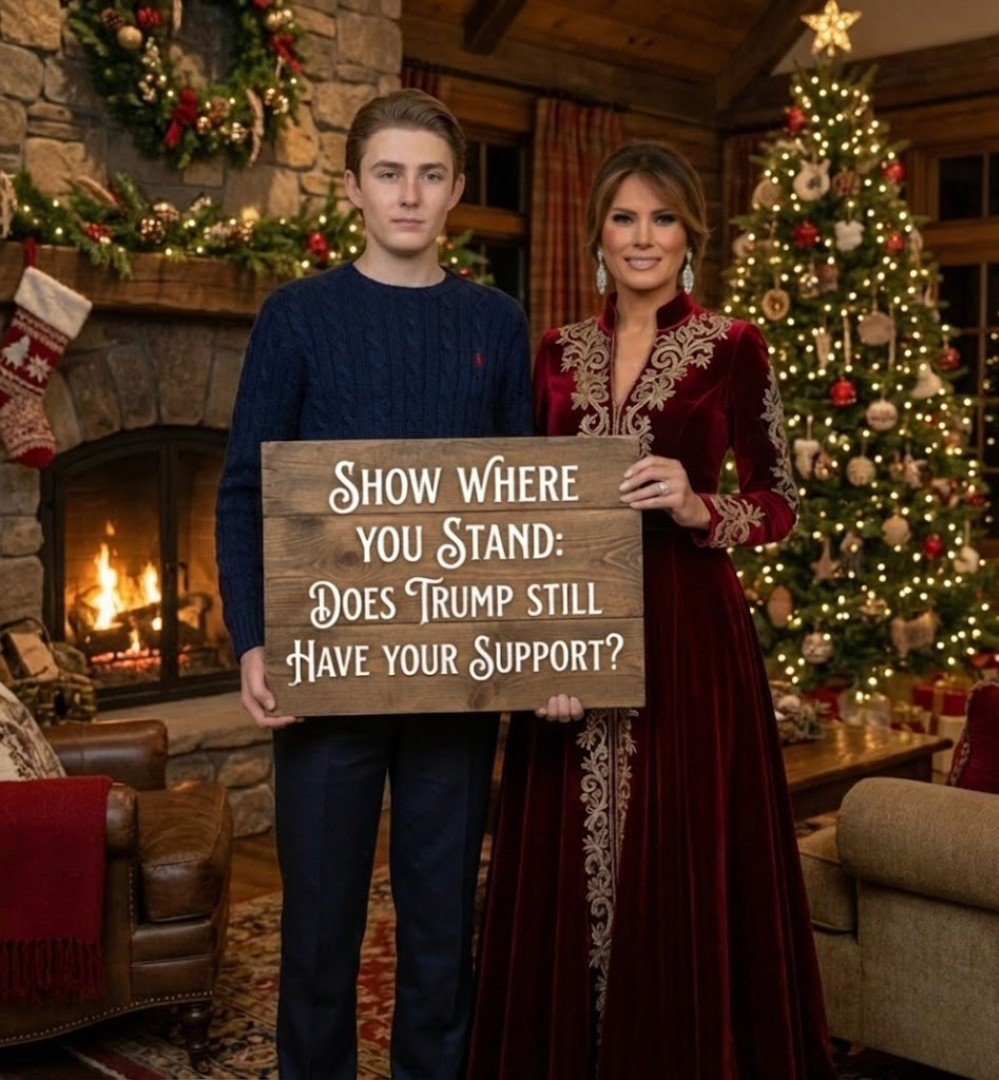
In a landscape often dominated by political talk and delayed action, a surprising new voice emerged with a tangible plan. Barron Trump, stepping into the public eye not as a political figure but as a concerned citizen, presented a bold solution to homelessness that cut through the usual noise. On a major news broadcast, he unveiled a fully private, quarter-billion-dollar initiative with a clear, urgent mission: to build permanent homes, not temporary shelters, and to do so without a single dollar of taxpayer money or a single layer of government approval. The announcement was delivered not with theatrical flair, but with a quiet, resolute confidence that immediately captured the nation’s attention.
The core of the initiative was its radical simplicity and speed. By raising $250 million in just 28 days through private donations, the project proved that public will can outpace bureaucratic processes. Barron emphasized that this was a direct effort by the people, for the people, challenging the long-held assumption that solving a national crisis requires government-led intervention. The message was clear: when action is divorced from political agendas and red tape, progress can happen at an astonishing rate. It was a statement about efficiency and collective responsibility, framed as a direct response to systemic failure.
Beyond the funding model, the vision itself was transformative. The goal was not to create vast shelters or transitional housing, but to establish entire communities of permanent, self-sustaining tiny homes and apartments. These would be offered with no rent, no complex application forms, and no barriers to entry. Barron framed this not as an act of charity, but as one of fundamental justice and social responsibility. The initiative sought to provide the stability necessary for individuals and families to truly rebuild their lives, arguing that dignity is impossible without a secure and lasting place to call home.
The most powerful moment of the announcement was profoundly simple. Barron held up a single, gleaming house key to the camera. This key, he stated, was ready right then for the next person who needed it. It was a literal and symbolic promise—a rejection of endless waiting lists and conditional aid. The gesture distilled the entire project into one powerful idea: that a safe, private home is a basic human right that should be accessible without humiliation or delay. It turned an abstract policy idea into a deeply human promise.
The results, as reported, were immediate and staggering. Within the first hours, viewership and global engagement broke records, and donations surged past the initial goal. Most importantly, thousands of people were reportedly housed in new communities within the first month. The initiative, by focusing on direct action and private mobilization, has sparked a national conversation about how we address homelessness. It stands as a compelling case study, suggesting that sometimes the most direct path to solving a profound problem is to simply build the solution, key by key.