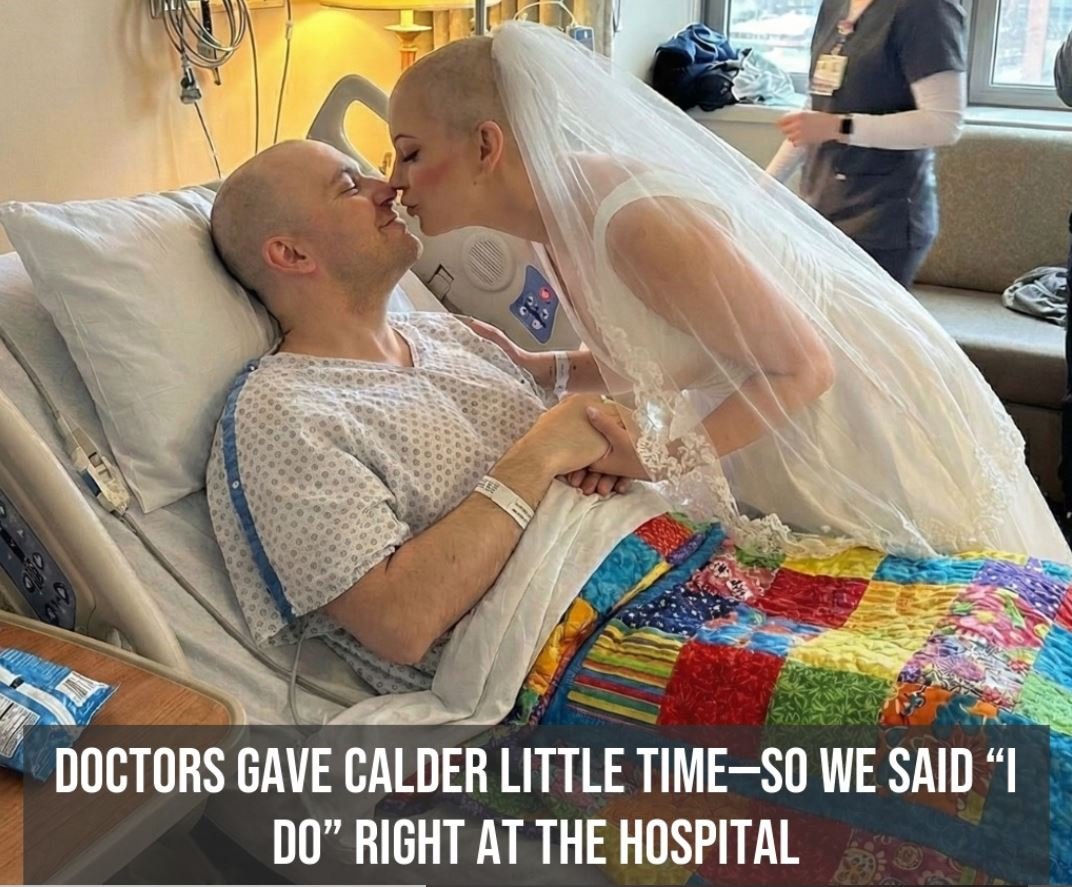
We said “I do” in a place where most people hope to never be. There was no aisle to walk down, just the short space between a hospital bed and a chair. The music came from a phone speaker, and our guests wore scrubs. At 24, this wasn’t the celebration we’d sketched in our dreams, but it became the most authentic moment of our lives. When the future you’ve planned is taken away, you learn very quickly what truly matters. For us, it was the fierce, urgent need to be husband and wife, not someday, but immediately.
It began with a diagnosis that felt like the world had tipped off its axis. My partner, Calder, was vibrant and full of life, and then, suddenly, he wasn’t. The doctors were kind but clear: time was not a promise we could count on. The traditional timeline of engagement, planning, and a big party evaporated. In its place was a stark, pressing question: did we want to spend whatever time we had as a committed couple, facing this as one unit? The answer was a resounding, unwavering yes. That decision became our anchor.
So much of that period was about redefining symbols. For me, one of the most powerful acts was shaving my head. As Calder’s treatment caused his hair to fall out, I wanted to erase that visible line between the sick and the well. Standing before the mirror, the clippers in my hand, it felt like shedding a layer of a former life. The person looking back was stripped down to pure commitment. It was a way to say, without words, “Your battle is my battle. I am with you, completely.”
Our wedding day was a beautiful, heartbreaking mosaic of raw emotion. Paper hearts taped to the wall by caring nurses were our decorations. The beeps and whirs of medical equipment were our processional. We laughed through tears as we fumbled with the rings, and we cried through smiles as we recited vows we’d written from the depths of our souls. The most profound moment came when Calder, holding my hand with all the strength he had, whispered, “I choose you—right now.” In that phrase, we captured the entire spirit of our love. It wasn’t a promise for a distant “forever,” but a vow for this very second, and every second we were given.
Calder is no longer here, but the meaning of that hospital-room wedding has only deepened. It taught me that love isn’t a feeling reserved for perfect, easy days. It is a conscious, brave choice made in the glare of fear and uncertainty. Our marriage wasn’t defined by a cake or a first dance, but by the courage to look the unknown in the eye and say, “Whatever comes, we face it together.” That choice, made in a room of sterile white, was the most colorful, real, and lasting gift we ever gave each other.