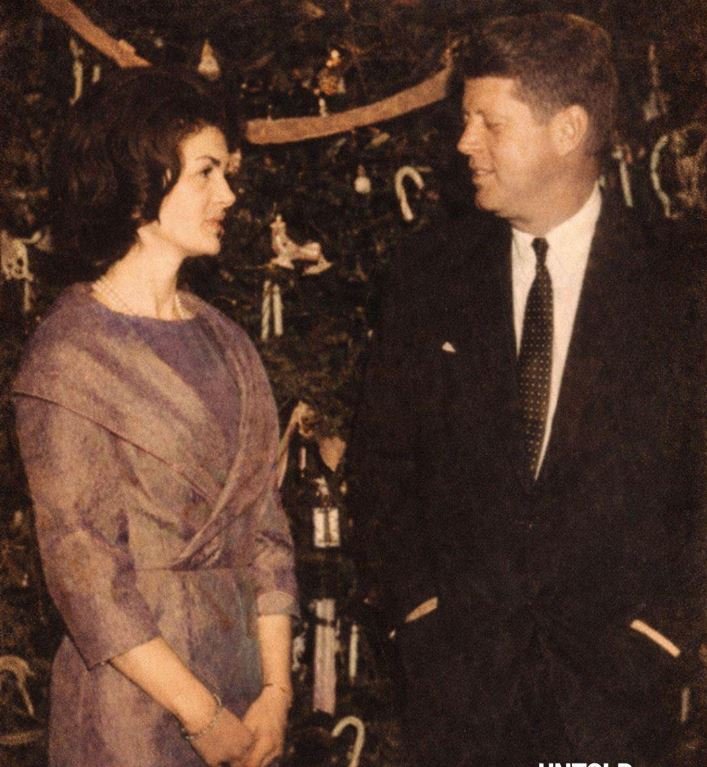
The White House, for Jacqueline Kennedy, was a place of profound joy and unbearable sorrow. After President John F. Kennedy’s assassination, the grand halls held only echoes of a shattered life. She vowed never to return, a promise she kept for nearly a decade. In 1971, an unavoidable duty loomed: the unveiling of her official portrait.
The thought of a public ceremony filled with cameras and speeches was a prospect too painful to endure. Instead of retreating, Jackie made an intensely personal request. She wrote directly to First Lady Pat Nixon, asking for the extraordinary: a private, unannounced visit for herself and her children, away from all media and fanfare. It was a plea not from a political figure, but from a widow and a mother.

Despite the legendary political rivalry between the Kennedys and Nixons, the response was immediate and gracious: a single word, “Yes.” On a quiet February day, with no fanfare, the Kennedy family was welcomed back to the White House by the Nixons themselves. The portraits were viewed in silence, a moment heavy with history but lightened by a shared, unspoken respect.
Pat Nixon guided Jackie through rooms of memory, including a garden named in her honor she had never seen. For Caroline and John Jr., it was a chance to connect with a past they were too young to remember. The evening was a deliberate departure from politics, an act of pure human kindness that allowed a family to grieve and remember in peace. Jackie later wrote that the day she had long dreaded became one of her most precious, a testament to the grace that can bridge even the deepest divides when humanity takes precedence.