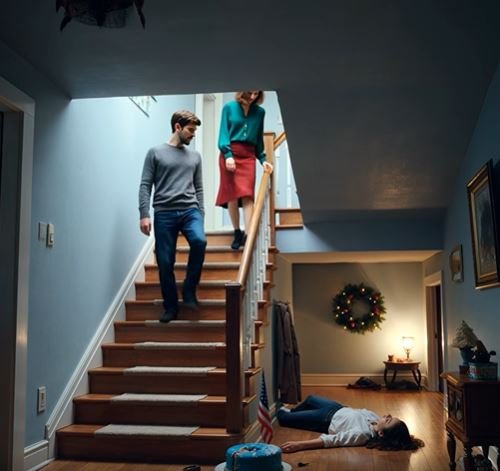
The sound I remember most isn’t the sickening crack of my spine against the basement stairs. It’s the cold, familiar silence that followed. I lay sprawled at the bottom, blue birthday cake smeared around me like evidence. My brother Jake’s face swam above me, his smirk perfectly hidden behind a mask of fake concern. I was twenty-eight years old, a physical therapist who helped people walk again, and I couldn’t feel my own legs. My father’s voice boomed from the top of the stairs. “Walk it off. Stop being a baby.” My mother’s accusation was quieter, sharper: “India, how could you ruin Jake’s special day with your dramatics?”
This wasn’t the first time. My entire life had been a series of Jake’s “accidents” and my parents’ denials. A broken wrist when I was fourteen was roughhousing. A concussion from a porch shove was clumsiness. I was the oversensitive older sister; he was the golden child. I built a life and a career across town, maintaining a careful distance. I only went to his sixteenth birthday party for my grandmother. I was carrying his cake up from the basement when I felt him behind me. His whisper, “Oops,” was calm. His shove was deliberate.
What happened next was a blur of willful blindness and one person’s decisive clarity. As my parents insisted I was being dramatic, our neighbor Fiona, a nurse, arrived. She took one look at me, performed a quick check I couldn’t feel, and called 911 over my father’s protests. When the paramedics came, the lead paramedic, Tara, asked me privately what happened. “I was pushed,” I whispered. I saw the shift in her eyes. As they stabilized me, she quietly radioed for police backup. She saw what my family refused to: the old bruises, the defensive posturing, the severity of an injury that didn’t match a simple stumble.
At the hospital, the MRI revealed the brutal truth: a severe spinal injury from the compression fracture. But it also revealed a longer history—evidence of past, poorly healed fractures and trauma. For the first time, with a detective listening and a doctor pointing to the scans, I told the whole, unvarnished truth about my brother and the family system that protected him. My grandmother, finally breaking her silence, corroborated everything. My best friend Payton became my rock. The legal case that followed exposed not just one push, but a lifetime of calculated cruelty and parental cover-ups.
Recovery was a mountain. Learning to walk again, first with bars, then a walker, then a cane, was a daily battle of will against my own body. The parallel journey was psychological—untangling a lifetime of gaslighting and reclaiming my voice. The trial was brutal, but the verdict was a devastating validation. Today, I walk with a cane. The nerve damage is permanent. But so is my freedom. I used my settlement to help found a center for survivors of family abuse. The greatest injury wasn’t to my spine; it was the decades of being told my reality was a lie. Healing began the moment someone finally listened, and believed.