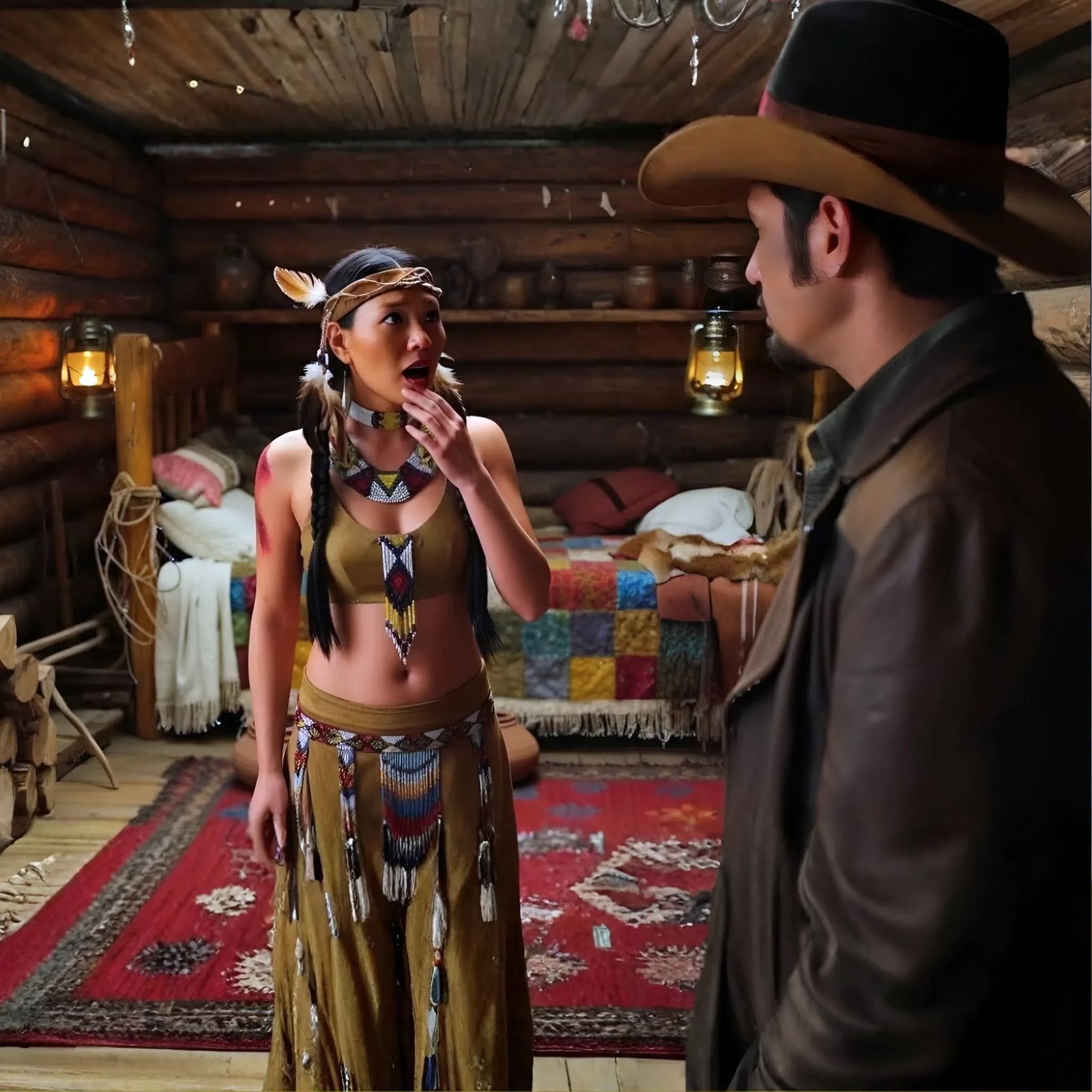
The winter land was unforgiving, a expanse of cold and silence where Colt Mercer sought a life of quiet solitude. A former scout weary of conflict, his only company was the wind and his own memories. This isolation was broken when he found a young Apache woman named Ayanna near his creek, half-frozen and fleeing soldiers who had scattered her people. Acting on a basic human impulse he thought he’d buried, Colt brought the injured stranger to his remote cabin. He expected to nurse her back to health and then resume his lonely existence, a brief interlude of duty in a life defined by withdrawal.
As Ayanna healed, a tentative and practical bond formed. She insisted on helping with chores, mending clothes and learning the rhythms of his solitary homestead. Their conversations were careful at first, circling the edges of their painful pasts. During a necessary trip to the nearby settlement for supplies, Ayanna witnessed a moment of intimacy between a young couple. With a frank curiosity devoid of malice, she turned to Colt and asked a startlingly innocent question about how white people “make children,” wondering aloud if she could “try too.” The question, voiced in public, sent a shock through Colt and amused the onlookers, but it sparked a deeper, private reckoning.
Colt’s flustered explanation about trust, choice, and the seriousness of such a bond led to a new understanding between them. Ayanna’s question, born not from flirtation but from a genuine attempt to understand a foreign culture, opened a door. In the quiet weeks that followed, their shared isolation became a space for something more than survival. They spoke of loss, of spirit, and of the possibility of building rather than just hiding. The cabin transformed from a shelter into the seed of a shared future.
When spring finally loosened winter’s grip, Ayanna brought up her innocent question again, this time with profound clarity. She told Colt she now understood that creating a family was about choosing and building together. She asked if he ever thought his quiet land might not be enough. His quiet affirmation spoke volumes. The story closes not with a dramatic declaration, but with a shared gaze and an unshakable understanding. Two wounded souls, from worlds meant to be at odds, had found in each other a reason to stop merely enduring the past and start building a future, together.