In the vast, silent rooms of the Hale mansion, everything was perfect and precisely controlled. The marble floors shone, the glass walls sparkled, and the air held a quiet so profound it felt like a presence. At the center of this carefully curated world were four-year-old twins, Ethan and Leo. They were intelligent, curious boys whose physical condition required the use of wheelchairs. They had every therapy and piece of equipment money could buy, provided by their father, Jonathan, a self-made millionaire who believed control was the ultimate form of love. Yet, in this house of perfection, one essential thing was missing: the sound of their laughter. They had never laughed, not once.
Their father had built walls of safety so high they had become a cage. Wet floors were a hazard, unexpected movement a threat, and chaos was the enemy. The beautiful swimming pool glittering beyond the glass doors was strictly off-limits, a symbol of too many variables. Every afternoon, the maid, Maria, would wheel the boys to the pool’s edge, lock their chairs in place, and let them watch the water in silence. She was a quiet observer in the home, but she saw what others missed: the longing in the boys’ eyes as they stared at the rippling light, the way they seemed to hold their feelings in check, waiting for permission to simply be.
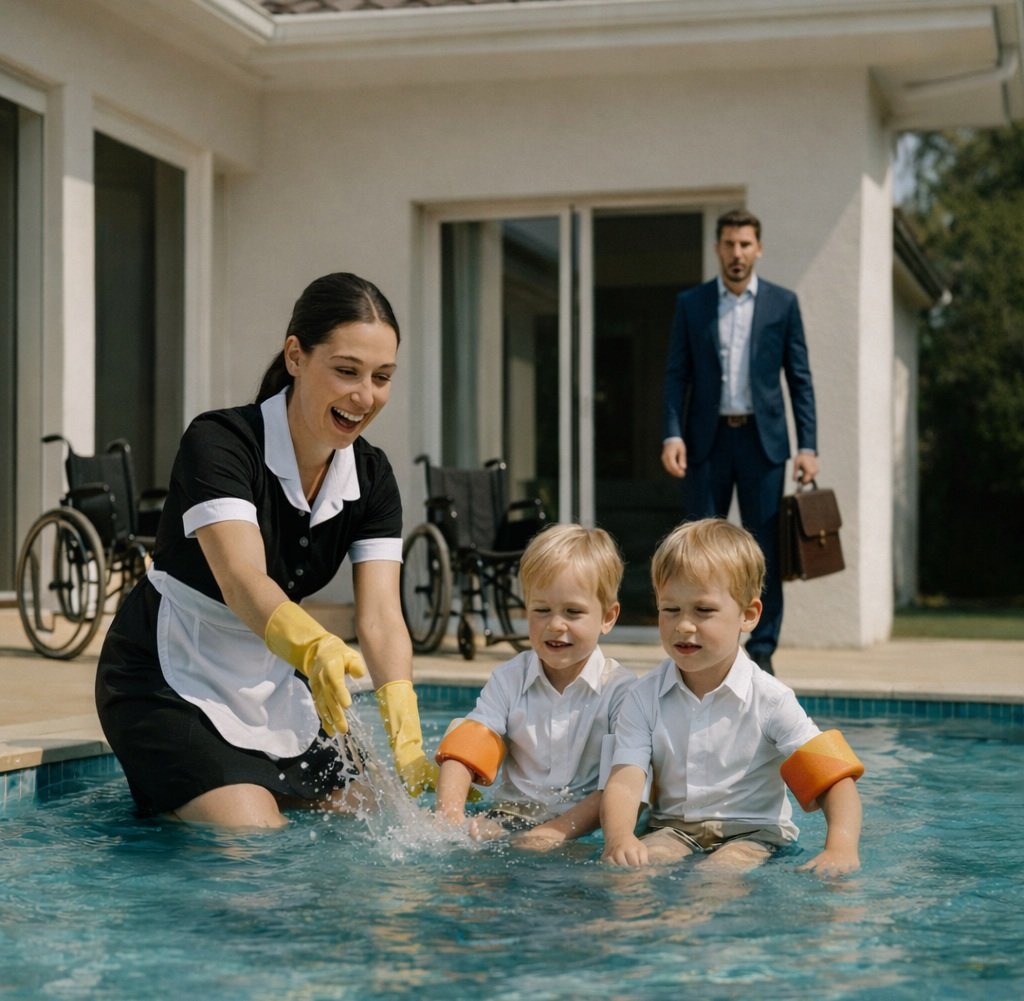
One stiflingly hot afternoon, something shifted. With the father away, Maria knelt between the twins. She put on her yellow cleaning gloves, dipped her hands in the water, and made a small, playful splash. The boys watched, mesmerized. Gently, she guided Leo’s hand until his fingertips touched the surface. He gasped, and then a sound emerged—a small, startled laugh. Hearing his brother, Ethan joined in. The laughter grew, tentative at first, then stronger, filling the silent courtyard with a sound more beautiful than any the mansion had ever known. In that moment, Maria’s heart swelled with hope and fear.
That was when Jonathan Hale returned home. Stepping onto the patio, he froze. The sight and sound of his sons laughing struck him with a physical force. His phone and briefcase fell from his hands, forgotten. He approached slowly, dropping to his knees before them, his eyes wide with awe. “I’ve never heard that,” he whispered, his voice breaking. He looked at Maria not with anger, but with a profound, grateful understanding. That night, the mansion was transformed. Music played, doors were left open, and the once-silent halls echoed with a new, joyful sound.
The lesson was simple but life-altering. Jonathan learned that in his quest to protect his sons from every physical risk, he had inadvertently shielded them from happiness itself. True safety isn’t about eliminating all risk; it’s about creating a space where joy can safely exist. The pool was soon equipped for adaptive use, and laughter became a scheduled part of their daily therapy. The story reminds us that sometimes, the most profound gifts aren’t things we can buy, but moments we allow to happen—a simple splash, a shared laugh, and the courage to let life be a little messy.