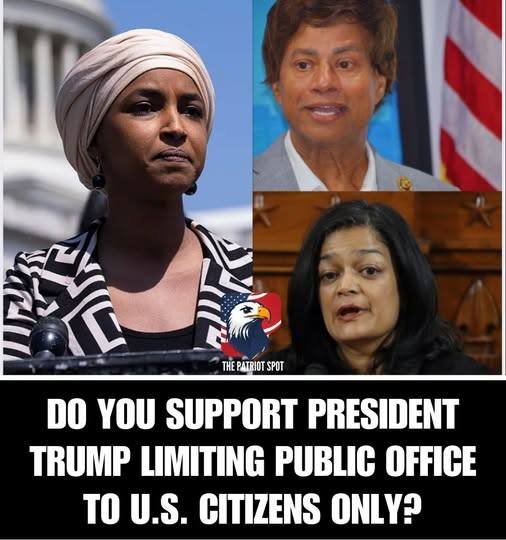
A recent proposal to restrict those who can hold public office in the United States to U.S. citizens only has ignited a fierce national conversation. The idea, championed by former President Donald Trump, touches on core questions about national identity, security, and the very definition of representation in a democracy. At its heart, the debate asks whether the formal bond of citizenship is a necessary prerequisite for the profound trust of holding elected power. This is not merely a policy discussion but a reflection of deeper ideological currents shaping America’s future.

Supporters of the measure argue from a position of sovereignty and security. They contend that public office requires an undivided loyalty to the United States, a loyalty that is formally cemented through the oath of citizenship. In an era of complex global threats and geopolitical rivalry, the fear that a non-citizen officeholder could be susceptible to foreign influence or hold dual allegiances is a powerful motivator. Proponents believe this rule would protect the integrity of American democracy, ensuring that every person making consequential decisions for the nation has a singular, unequivocal stake in its destiny. It is framed as a commonsense safeguard for national interests.
On the other side, critics see the proposal as fundamentally at odds with American tradition and principle. They argue it is a solution in search of a problem, potentially excluding dedicated, long-term residents who contribute immensely to their communities. The United States has a long history of immigrants serving at every level of society, and critics believe this spirit should extend to leadership. They warn that such a ban could deprive communities of valuable perspectives and signal a retreat from the inclusive ideals that have attracted talent and ambition to American shores for generations. The question is raised: does length of residence and depth of contribution mean less than a formal passport?

The constitutional dimensions of this debate are equally significant. While the U.S. Constitution already requires citizenship for federal offices like President, Senator, and Representative, state and local rules vary. A blanket federal mandate would override those local choices, centralizing a definition of eligibility in a way that some legal scholars argue could clash with principles of federalism and equal protection. The practical impact would be most acutely felt in local governments, where a trusted community leader serving on a school board or city council could be barred from office based on paperwork, not commitment.
Ultimately, this debate is a mirror held up to the nation’s soul. It forces a conversation about what we value most: the formal boundaries of the club, or the demonstrated commitment of its members? The decision of who is fit to govern speaks volumes about what kind of country America aspires to be—one that prizes a protective exclusivity or one that offers a pathway to full participation, including leadership, to those who choose to build their lives within its borders. The answer will shape the face of American democracy for years to come.