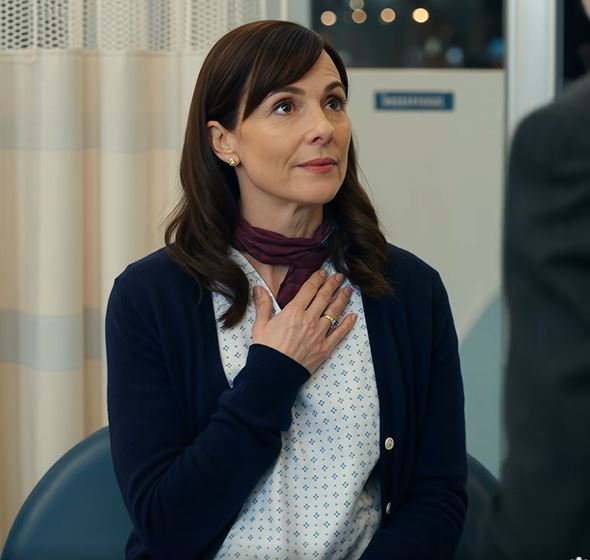
At 3:47 AM, a pain unlike any other clamped around my chest. As a retired ER nurse, I knew the terrifying truth immediately: this was a heart attack. My hands shook, not just from the pain, but from fear. In that terrifying, lonely moment, I called the two people I thought would come without question—my grown children.
My son’s voice was thick with sleep and irritation. “Mom, it’s almost four. Call an Uber. I have a huge presentation.” My daughter was equally dismissive, suggesting antacids. They both had work in the morning. So, at my most vulnerable, I opened a rideshare app. A kind stranger helped me into his car, refusing payment, saying he hoped someone would do the same for his mother. His compassion, in that moment, was the only warmth I felt.
Alone in the ER, the clinical diagnosis came quickly: a ‘widow-maker’ heart attack. But the real shock arrived with the cardiologist on call. It was Colin. The Colin. My first love, the father of my children, who vanished 36 years ago when his family sent him away. The man I’d raised our twins believing had chosen his future over us. Now, he was the one prepping me for emergency surgery, his face a mirror of my own stunned disbelief.
The surgery saved my body. The hours that followed saved my soul. As I recovered, Colin and I untangled the painful knot of lies and separation our families had woven. He never knew about the pregnancy. He’d spent decades searching for a ghost—me. Meanwhile, I’d built a life defined by solitary strength, raising two children who had grown into successful, yet distant, adults.
When Colin called my children from my hospital phone, their tune changed. The panic in their voices was real, laced with a dawning horror at what their dismissal could have cost. They rushed to the hospital, only to walk into a second seismic shock: meeting the father they’d never known, the man who had just saved the mother they’d failed.
What followed wasn’t a Hallmark reunion. It was a raw, painful reckoning. In the sterile light of the ICU, we had nowhere to hide. My children had to face the hard truth that their success had come with an emotional cost—their connection to me. Colin had to face the life and family he’d missed. And I had to face my own role: the independent fortress I’d built had also taught my children I never needed saving.
The months after my discharge became a laboratory for change. We didn’t just talk about doing better; we practiced it. My son learned to fix a faucet at my house. My daughter organized my medications. They called to talk, not out of guilt, but with genuine curiosity about my day. Colin and I moved slowly, building a new relationship not on teenage passion, but on the weathered foundations of who we’d become.
The lesson was brutal but necessary. Love is not a theory or a feeling you claim. It is a verb, demonstrated by who shows up at 4 AM. My heart attack was a brutal reset button. It showed my children that some meetings can be rescheduled, but some phone calls cannot. It taught Colin that some searches end where they began. And it taught me that sometimes, you have to almost lose everything to learn how to truly hold on to what matters. Today, our family is stitched together not by obligation, but by the conscious, daily choice to be present. We learned that the hard way, and for that, I am oddly grateful.